



Starting Applied Behavior Analysis (ABA) therapy for your child is a major milestone. It marks the beginning of a dedicated, highly personalized journey toward building meaningful life skills, improving communication and fostering independence.⁸ ¹¹ ¹²
However, before sessions officially begin, families must navigate the intake process.
For many parents, taking those initial steps can feel overwhelming. Knowing what documents to gather, what questions will be asked and what evaluations take place helps ease anxiety and prepares your family for a smooth start.
In this article, we’ll outline an essential ABA intake checklist to help you navigate the onboarding process with confidence.
What is the ABA Intake Process?
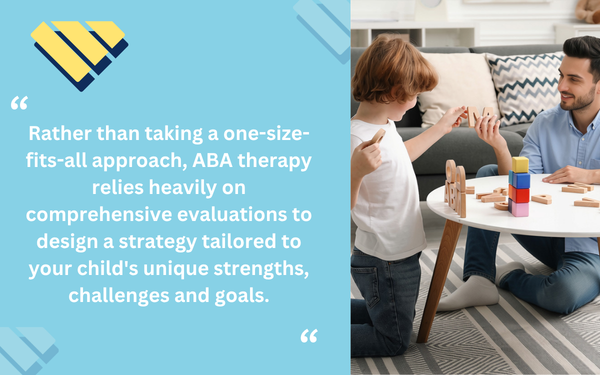
The ABA intake process is the foundational phase where a provider gathers critical medical, developmental and behavioral information about your child. Rather than taking a one-size-fits-all approach, ABA therapy relies heavily on comprehensive evaluations to design a strategy tailored to your child’s unique strengths, challenges and goals.¹⁵
During intake, clinical teams work alongside caregivers to review diagnostic history, understand family dynamics, verify insurance coverage and schedule an initial assessment conducted by a Board Certified Behavior Analyst (BCBA).²³
Because ABA therapy requires close collaboration between therapists and families, intake serves as a two-way street: It allows the provider to learn about your child while giving you the opportunity to ask questions, voice concerns and learn about the path ahead.¹
| Checklist Item | What to Prepare or Expect | Why It Matters |
|---|---|---|
| Official Autism Diagnosis Report | Provide a comprehensive evaluation completed by a qualified professional, such as a developmental pediatrician, child psychologist or pediatric neurologist, confirming an Autism Spectrum Disorder diagnosis. | Helps establish your child’s diagnostic history and supports clinical and insurance eligibility requirements. |
| Physician Referral or Order | Have a formal prescription or referral letter from your child’s pediatrician recommending ABA therapy as medically necessary. | May be required as part of the provider’s documentation and insurance authorization process. |
| Insurance Card and Caregiver ID | Prepare up-to-date copies of insurance cards and caregiver photo identification. | Allows the administrative team to verify coverage and begin the insurance pre-authorization process. |
| IEP or 504 Plan | If applicable, provide your child’s most recent Individualized Education Program, 504 Plan or related early intervention documentation. | Gives the clinical team insight into existing academic, developmental and social supports. |
| Previous Assessment Reports | Gather records from speech therapy, occupational therapy, previous ABA providers or other relevant evaluations. | Helps the BCBA understand prior services and establish a more complete developmental baseline. |
| Caregiver Interview | Be prepared to discuss medical history, communication, routines, sensory preferences, challenging behaviors and your family’s priorities. | Provides context that direct assessment alone may not capture and helps connect treatment goals to everyday life. |
| Behavior and Routine Notes | Note common triggers, preferred toys and activities, successful calming strategies and times when challenges are most likely to occur. | Gives the BCBA practical information that may help guide observations and treatment planning. |
| Direct Observation and Baseline Evaluation | Expect the BCBA to observe your child communicating, playing, following instructions and responding to social prompts or changes in the environment. | Establishes current skill and behavior levels that can be used to develop measurable treatment goals. |
| Standardized ABA Assessments | Depending on your child’s needs, the BCBA may use tools such as the VB-MAPP, ABLLS-R or AFLS during the assessment process. | Helps evaluate areas such as communication, learning, play, social interaction and functional life skills. |
| Family Goals and Priorities | Identify the skills that matter most to your family, such as functional communication, toilet training, transitions or greater independence. | Supports development of individualized goals that are meaningful and relevant to your child’s daily life. |
| Treatment Plan Review | Review the BCBA’s proposed short-term and long-term goals, recommended weekly therapy hours and baseline behavioral data. | Gives caregivers an opportunity to provide input before the plan is submitted for final insurance authorization. |
| Scheduling and Therapy Environment | Discuss your family’s schedule and whether services will take place at home, in a center or another approved setting. For home sessions, prepare a comfortable, low-distraction area when possible. | Helps the clinical team design a schedule and treatment environment that can be integrated into your family’s routine. |
What Documents Do You Need for the ABA Intake Checklist?
Before formal assessments take place, clinical administrative teams require specific documentation to verify eligibility, secure insurance pre-authorization and review your child’s developmental history.²³ Having these documents ready in advance significantly speeds up the onboarding timeline.
Key items on your documentation checklist include …
- Official Autism Diagnosis Report: A comprehensive evaluation completed by a qualified professional such as a developmental pediatrician, child psychologist or pediatric neurologist confirming a diagnosis of Autism Spectrum Disorder (ASD)²
- Physician Referral or Order: A formal prescription or referral letter from your child’s pediatrician recommending ABA therapy as medically necessary²
- Insurance Card and Photo Identification: Up-to-date copies of your insurance cards, alongside caregiver identification for verification
- Individualized Education Program (IEP) or 504 Plan: If your child attends school or receives early intervention services, recent educational plans that provide insight into current academic and social supports⁴
- Previous Assessment Reports: Records from past speech therapy, occupational therapy (OT) or prior ABA therapy providers to help establish a comprehensive baseline of your child’s developmental progress⁵
What Happens During the ABA Intake Assessment?
Once the required paperwork is submitted and approved by insurance, the BCBA schedules the formal clinical intake assessment.² This phase typically combines direct observation with detailed family interviews to build a complete picture of your child’s daily life.¹
Caregiver Interview and Behavioral History
The BCBA will meet with parents or primary caregivers to discuss the child’s medical history, communication styles, daily routines, sensory preferences and challenging behaviors.¹⁵
Caregivers are invited to share their main priorities, whether that involves improving functional speech, helping with toilet training or managing tantrums during transitions.⁸¹¹
Direct Observation and Baseline Evaluation
The clinician will interact with your child in a structured yet playful setting (in-home or at a center). Using standardized assessment tools such as the VB-MAPP, ABLLS-R or AFLS, the BCBA observes how your child communicates, plays, follows instructions and reacts to social prompts or environmental changes.⁶⁷
Treatment Plan Creation
Using the collected data, the BCBA drafts an individualized treatment plan. This document outlines specific, measurable short-term and long-term goals, recommended therapy hours per week and baseline behavioral data.¹⁰
The plan is presented to the family for review and input before being submitted to insurance for final authorization.¹²
How Can Parents Prepare for a Successful ABA Onboarding?
Preparing for ABA therapy requires setting up your family and home environment for a smooth transition into new routines.
- Organize Medical Files Early: Keep digital and physical copies of diagnostic summaries and medical history in one accessible folder.
- Track Observed Behaviors: Take brief notes on daily triggers, preferred toys or activities, and times of day when your child feels most calm or frustrated.¹
- Communicate Openly: Be honest during the intake interview about your family’s schedule, home rules and specific challenges. Transparent communication ensures therapy goals align naturally with your home life.¹
- Prepare Your Child: Talk positively about meeting a new friend or teacher. If home therapy is starting, designate a comfortable, low-distraction space for initial sessions.
Blue Gems ABA Guides You Through Every Step of Intake
Figuring out healthcare paperwork and starting a new therapy program can feel complex, but you don’t have to do it alone. Preparing your documentation and knowing what to expect during initial assessments helps guarantee your child receives timely, effective care.
At Blue Gems ABA, our dedicated intake coordinators and clinical staff support families through every stage of the onboarding journey, from navigating insurance coverage to completing initial clinical assessments. We craft individualized, evidence-based treatment plans tailored to meet your child exactly where they are.⁹
To learn more about our ABA therapy services or to start the intake process today, please contact us today.
References
- Council of Autism Service Providers — ABA Practice Guidelines (Version 3.0)
- TRICARE — Autism Care Demonstration Fact Sheet
- New York State Department of Financial Services — Standards for Insurance Coverage for Applied Behavior Analysis
- U.S. Department of Education — Individuals with Disabilities Education Act, Section 1414
- New York State Department of Health — Children and Family Treatment and Support Services
- AVB Press — Official VB-MAPP Publisher
- WebABLLS / Behavior Analysts, Inc. — ABLLS-R Overview
- National Academies of Sciences, Engineering, and Medicine — Evidence Base for Applied Behavior Analysis
- Hume et al. — Evidence-Based Practices for Children, Youth, and Young Adults with Autism: Third Generation Review
- Behavioral Health Center of Excellence — Applied Behavior Analysis Treatment of Autism: Practice Guidelines
- TRICARE — Autism Spectrum Disorder
- Yu et al. — Efficacy of Interventions Based on Applied Behavior Analysis for Autism Spectrum Disorder: A Meta-Analysis
