


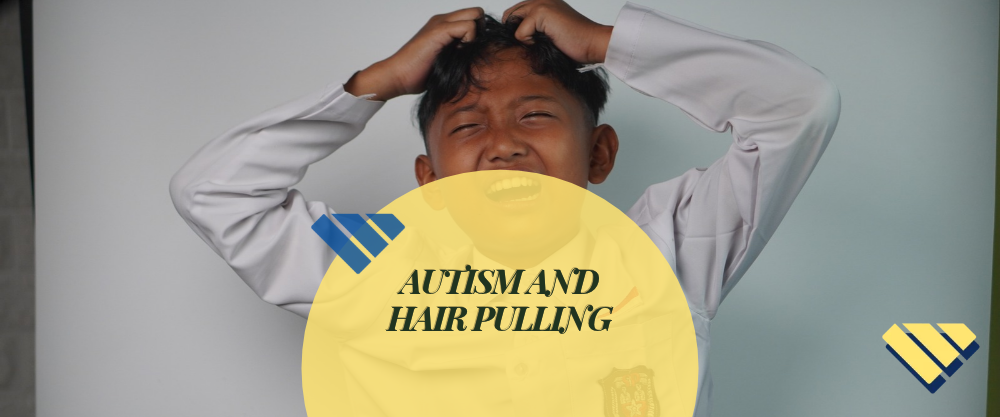
Seeing your child pull at their hair can be upsetting. You may notice them twisting strands during a TV show or tugging hard when they’re frustrated, and sometimes small bald patches appear.
Hair pulling shows up in some children with autism spectrum disorder (ASD), and it can mean different things for different kids. For one child, it’s a soothing habit. For another, it’s a sign of stress or a way to say something they can’t put into words.
Figuring out which one you’re seeing is the key to helping.
In this article, we’ll discuss why some autistic children pull their hair and how parents can respond.
Key Takeaways
- Hair pulling in autistic children can be related to sensory needs, stress, communication difficulties, or other factors.
- Bald patches, skin damage, distress, and swallowing hair are warning signs that warrant professional attention.
- Understanding what happens before and after hair pulling can help identify appropriate support strategies.
- Individualized behavioral approaches may include safer sensory alternatives, communication skills, and caregiver training.
Why Do Some Autistic Children Pull Their Hair?
Hair pulling often falls somewhere between stimming and self-injury. Many children start because the feeling is calming or satisfying, and some keep going until it causes harm.23
Self-injury is more common in autism than many parents expect. A large study of 8-year-olds in a national autism tracking network found that about 28% of autistic children had some form of self-injurious behavior. Hair pulling was one of the behaviors counted, along with head banging and biting.1
Common reasons a child may pull their hair include:
- Sensory input, since tugging and twisting hair creates strong sensations on the scalp and fingers
- Calming down during stress or boredom
- Communicating frustration or the need for a break
- Getting attention or escaping a task, if the behavior has led to those results before
Hair pulling also overlaps with a condition called trichotillomania, a repetitive urge to pull out one’s hair. It can occur alongside autism, and a child’s doctor or a mental health professional can help sort out the difference.36
Some children pull other people’s hair instead of their own. That usually serves similar purposes, such as seeking sensation or getting a reaction, and it can be addressed in similar ways.4
Why Children With Autism May Pull Their Hair
| Possible reason | What parents might notice | How to respond |
|---|---|---|
| Sensory input | Pulling or twisting hair during quiet activities | Offer a safe sensory alternative |
| Stress or anxiety | Pulling increases during difficult situations | Identify stressors and teach coping skills |
| Communication difficulties | Pulling occurs when the child wants something or needs a break | Teach a way to request help or a break |
| Avoiding demands | Pulling occurs during challenging tasks | Assess triggers and adjust demands appropriately |
| Trichotillomania | Repeated pulling that causes hair loss | Seek professional assessment and appropriate treatment |
These are possible explanations, not diagnoses. Similar-looking behaviors may have different causes and should be assessed individually.
When is Hair Pulling a Concern?
Twirling hair now and then is common in all children. It’s worth paying closer attention when:
- You see bald patches, broken hair or irritated skin on the scalp
- Pulling happens often enough to interfere with play or sleep
- Your child seems distressed or can’t stop once they start
- Your child eats the hair they pull
That last sign calls for a quick call to your pediatrician. Swallowed hair can collect in the stomach and cause serious digestive problems.7
Sudden increases also deserve a closer look. A new stressor or a health problem can make repetitive behaviors more frequent.45
How Can Parents Respond to Hair Pulling?
Reacting strongly, even with concern, can sometimes make the behavior more likely, especially if your child enjoys the attention. Calm, steady responses tend to work better.414
Shorter hairstyles can help some children by making strands harder to grab. Think of it as one tool, not a full solution.8
How Can ABA Therapy Help?
Applied behavior analysis (ABA therapy) starts with a careful look at why your child pulls their hair. A Board Certified Behavior Analyst (BCBA) gathers information on when pulling happens and what comes before and after it.9
Once the reason is clear, the plan focuses on meeting that need in a safer way. A child who pulls for sensory input might learn to use a fidget instead. A child who pulls when frustrated might learn to ask for a break with a word or a picture card.10
Some plans also use habit reversal, a well-studied approach for hair pulling. The child learns to notice the urge and do something else with their hands, such as making a fist or squeezing a ball, until the urge passes.111213
Progress is tracked closely, and the plan changes as your child improves. Parent training helps you use the same approach at home.14
Blue Gems ABA Helps Families Understand and Respond to Hair Pulling
Hair pulling is a way some autistic children cope with what they’re feeling. With patience and a plan built around the reason behind it, many children learn safer ways to meet the same need.
At Blue Gems ABA, our team of experienced therapists helps children on the autism spectrum build coping and communication skills. Each treatment plan is designed around your child.
To learn more, please contact us today.
Frequently Asked Questions
Is hair pulling common in children with autism?
Hair pulling occurs in some autistic children, but not all. It may be related to sensory needs, stress, communication difficulties, or a separate hair-pulling disorder.
Is hair pulling a form of stimming?
It can be, especially when the behavior provides sensory input or helps with self-regulation. However, hair pulling that causes injury or significant distress deserves further assessment.
What should I do if my autistic child is pulling out their hair?
Observe when the behavior happens and discuss bald patches, skin injuries, or persistent pulling with your child’s pediatrician. A qualified behavioral or mental health professional can help identify appropriate interventions.
Can ABA therapy help with hair pulling?
ABA-based approaches may help when assessment identifies behavioral functions that can be addressed through communication, environmental adjustments, or replacement skills. Treatment should be individualized and coordinated with medical or mental health care when appropriate.
What if my child swallows the hair they pull out?
Contact your child’s pediatrician promptly because swallowed hair can accumulate in the digestive tract. Severe abdominal pain, persistent vomiting, or signs of obstruction require urgent medical evaluation.
References
- Population-based study of self-injurious behaviors in children with autism. PubMed. https://pubmed.ncbi.nlm.nih.gov/27565654/
- Autism Speaks. Autism Symptoms. https://www.autismspeaks.org/autism-symptoms
- Mayo Clinic. Trichotillomania (Hair-Pulling Disorder): Symptoms and Causes. https://www.mayoclinic.org/diseases-conditions/trichotillomania/symptoms-causes/syc-20355188
- American Academy of Pediatrics. Identification, Evaluation, and Management of Children With Autism Spectrum Disorder. https://publications.aap.org/pediatrics/article/145/1/e20193447/36917/Identification-Evaluation-and-Management-of
- American Academy of Pediatrics. Hair Loss (Alopecia) in Children. https://www.healthychildren.org/English/health-issues/conditions/skin/Pages/Hair-Loss-Alopecia.aspx
- National Library of Medicine. StatPearls: Trichotillomania. https://www.ncbi.nlm.nih.gov/sites/books/NBK493186/
- Mayo Clinic. Trichotillomania: Symptoms, Causes, and Complications. https://www.mayoclinic.org/diseases-conditions/trichotillomania/symptoms-causes/syc-20355188
- NHS. Trichotillomania (Hair-Pulling Disorder). https://www.nhs.uk/mental-health/conditions/trichotillomania/
- Autism Speaks. Behavioral Interventions. https://docs.autismspeaks.org/behaviors-overview/interventions
- Autism Speaks. Functional Communication Training. https://docs.autismspeaks.org/evidence-based-practices/fct
- Randomized controlled trial of behavioral treatment for pediatric hair-pulling disorder. PubMed. https://pubmed.ncbi.nlm.nih.gov/28005403/
- Review of habit reversal training. PubMed. https://pubmed.ncbi.nlm.nih.gov/23964997/
- Research on behavioral treatment of trichotillomania. PubMed. https://pubmed.ncbi.nlm.nih.gov/30446196/
- Research on behavioral treatment and family involvement in childhood hair pulling. PubMed. https://pubmed.ncbi.nlm.nih.gov/27701731/
