


Understanding how a child processes the world around them is one of the most important aspects of supporting their growth. When a child experiences intense reactions to sights, sounds, textures or movements, parents often wonder what might be driving those behaviors.
Two terms that frequently come up in these conversations are Sensory Processing Disorder (SPD) and Autism Spectrum Disorder (ASD).
While SPD and autism share noticeable overlaps – particularly around sensory sensitivities – they are distinct conditions with different diagnostic criteria, underlying causes and support strategies.
By understanding the key differences and connections between Sensory Processing Disorder and autism, parents and caregivers can better navigate their child’s unique needs and seek the most effective care.
In this article, we’ll explore the relationship between Sensory Processing Disorder vs. autism, how to spot the differences, and how tailored therapies such as Applied Behavior Analysis (ABA therapy) can help.
What is Sensory Processing Disorder (SPD)?
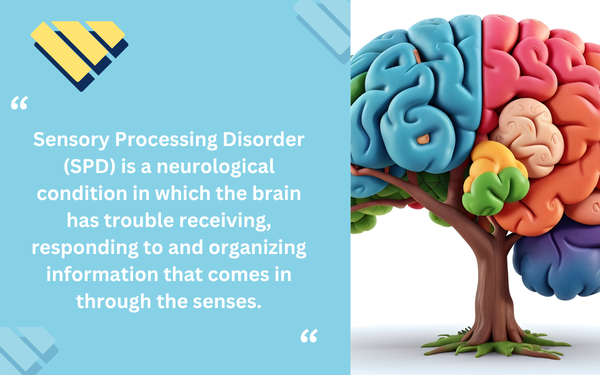
Sensory Processing Disorder (SPD)1 is a neurological condition in which the brain has trouble receiving, responding to and organizing information that comes in through the senses.
Our brains constantly take in information from the eight sensory systems: visual (sight), auditory (sound), tactile (touch), olfactory (smell), gustatory (taste), vestibular (balance and spatial orientation), proprioceptive (body awareness) and interoceptive (internal bodily signals such as hunger or pain)2.
For children with SPD, these signals aren’t processed efficiently, leading to unexpected or heightened responses.
Children with SPD generally fall into three main patterns of sensory processing:
- Sensory Over-Responsivity (Hyper-sensitivity): Children experience sensory input too intensely. A loud vacuum cleaner, a scratchy clothing tag or a bright fluorescent light can cause physical discomfort, extreme distress or emotional meltdowns.
- Sensory Under-Responsivity (Hypo-sensitivity): Children have a high pain tolerance or barely react to environmental stimuli. They may not notice when they are touched, dropped something or when their face is wet.
- Sensory Craving (Seeking): Children actively seek out intense sensory experiences. They may constantly crash into furniture, spin in circles or touch every surface they walk past to satisfy an internal need for input.3
It is important to note that SPD can exist as a standalone condition, independent of any other developmental diagnosis.
How Does Autism Spectrum Disorder (ASD) Differ?
Autism Spectrum Disorder (ASD) is a broader neurodevelopmental condition that affects how a person communicates, interacts with others, learns and behaves5.
While sensory processing challenges are a core feature of autism, they represent just one part of the diagnostic profile. Under the Diagnostic and Statistical Manual of Mental Disorders (DSM-5), an autism diagnosis requires significant differences across two main areas:
- Social Communication and Interaction: Challenges with back-and-forth conversation, nonverbal cues (eye contact, body language), building friendships and understanding social contexts.
- Restricted, Repetitive Patterns of Behavior: Repetitive physical movements (stimming such as hand-flapping or rocking), rigid insistence on routines, highly focused interests, and hyper- or hypo-reactivity to sensory input.6
Because sensory sensitivities are formally recognized as a component of restricted and repetitive behaviors in ASD7, almost all autistic individuals experience some degree of sensory differences. However, the presence of social communication challenges is the key distinction between ASD and stand-alone SPD.
Comparing Sensory Processing Disorder and Autism
Because both conditions can involve strong reactions to sensory environments, it can be helpful to look at how SPD and ASD compare side by side.
How ABA Therapy Supports Children with Sensory Challenges and ASD
When a child on the autism spectrum experiences sensory processing differences, everyday environments such as classrooms, grocery stores or family gatherings can become overwhelming8.
ABA therapy provides structured, individualized support to help children navigate these challenges successfully9.
ABA therapy adapts to address sensory-related difficulties in several key ways.
Identifying Functional Triggers
ABA therapists conduct functional assessments to determine whether specific behaviors (such as running away or shutting down) are driven by sensory overload, a desire to escape discomfort or difficulty communicating a need.
Building Functional Communication Skills
Instead of responding to sensory overload with distress, children are taught functional communication alternatives10 – such as using words, signs or PECS (Picture Exchange Communication System) to ask for a break, request noise-canceling headphones or express that an environment is too bright.
Desensitization and Coping Strategies
ABA uses gradual exposure paired with positive reinforcement to help children build tolerance to necessary daily routines that cause sensory discomfort, such as brushing teeth, getting haircuts or washing hands.
Developing Self-Regulation Routines
Therapists work with families to integrate sensory breaks, predictable schedules and positive coping techniques into the child’s daily life, promoting emotional balance and independence.
Blue Gems ABA Supports Your Child’s Journey
Navigating the nuances between Sensory Processing Disorder and autism can feel overwhelming for parents, but you don’t have to do it alone. Understanding your child’s specific profile is the first step toward unlocking their full potential and helping them thrive in their day-to-day environment.
At Blue Gems ABA, our team of experienced Board Certified Behavior Analysts (BCBAs) and therapists provide compassionate, individualized ABA therapy tailored to your child’s unique needs. We work closely with families to address sensory sensitivities, improve communication and build meaningful skills in a supportive, nurturing setting.
To learn more about how Blue Gems ABA can support your child, please contact us today.
References
- Sensory Integration Therapies for Children With Developmental and Behavioral Disorders — American Academy of Pediatrics
- Sensory Processing and Autism — Autism Research Institute
- Understanding Sensory Issues in Children — Child Mind Institute
- Sensory Integration & Processing — American Occupational Therapy Association
- Autism Spectrum Disorder — National Institute of Mental Health
- Clinical Testing and Diagnosis for Autism Spectrum Disorder — Centers for Disease Control and Prevention
- Sensory Perception in Autism — Nature Reviews Neuroscience
- Sensory Adjustments for Autistic Pupils — National Autistic Society
- Behavioral Management Therapy for Autism — National Institute of Child Health and Human Development
- An Analysis of Functional Communication Training as an Empirically Valid Treatment for Problem Behavior — Johns Hopkins University
