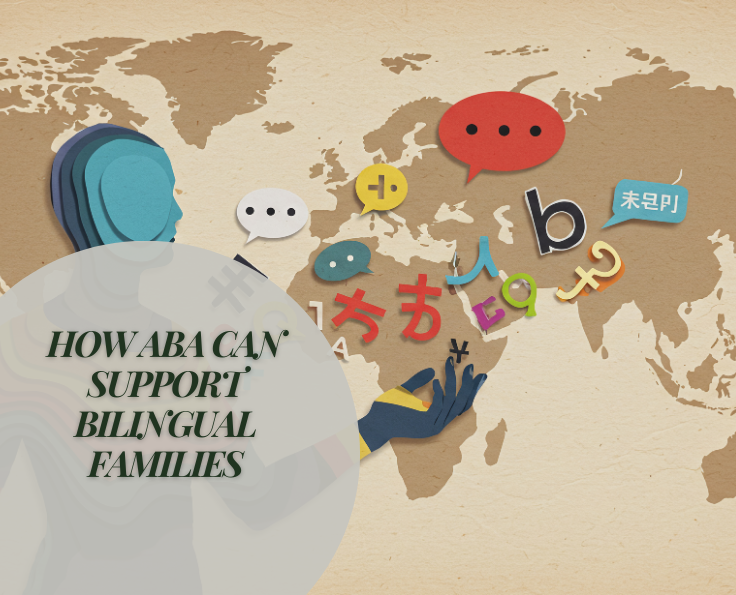
How ABA Can Support Bilingual Families
Autism spectrum disorder (ASD) looks different for every person who has it. Because of this, the interventions and support that is provided to individuals with autism and their families needs to be specifically tailored to their unique needs.
This is one of the reasons why applied behavior analysis (ABA therapy) is considered the leading treatment for people with autism. Each plan is created specifically for each individual, catered to their strengths, challenges, preferences and more.
A major goal of ABA therapy is to help individuals with autism gain the social and communication skills with which they often struggle, regardless of what language or languages the family speaks.
In this article, we’ll dive deeper into this topic.
| Key Takeaways |
|---|
| ABA therapy is effective for both monolingual and bilingual children with autism. |
| Bilingual children can benefit cognitively and socially from dual-language exposure. |
| Treatment plans should incorporate cultural identity and home languages. |
| Simultaneous instruction of two languages can lead to stronger communication skills. |
| Family engagement and collaboration are critical for successful outcomes. |
Table Of Contents
Is ABA Therapy Appropriate for Supporting Bilingual Families?
Research has shown that ABA therapy is very effective at treating bilingual individuals with autism. In other words, children who have autism aren’t hindered by the fact that they speak two or more languages and actually can be expected to have outcomes comparable to their peers who are monolingual.
The studies have revealed that children with autism who get ABA therapy can gain language skills through either simultaneous or sequential instruction. That is, therapists can introduce both languages at the same time during therapy or introduce a primary language first and then layer in a second language after.
Interestingly, the research about the effect of ABA therapy on bilingual individuals has shown that simultaneous learning can result in superior performance by children in things such as intraverbals and listener responses.
Children who are raised in a bilingual household also gain additional social benefits such as a wider vocabulary and improved use of gestures. The scientific belief is that this is the case because managing more than one language helps individuals gain cognitive flexibility.
| Feature | Monolingual Children | Bilingual Children |
|---|---|---|
| Language Instruction | One language is used throughout therapy sessions. | Therapists may introduce both languages simultaneously or use a primary-first, secondary-later approach. |
| Assessment Language | Conducted in the single language spoken at home or most familiar to the child. | Evaluations incorporate both languages to ensure accurate measurement of language development. |
| Cognitive Benefits | Standard cognitive development support. | Improved cognitive flexibility and executive function from managing two languages. |
| Cultural Relevance | Therapy materials are more general and not necessarily culture-specific. | Therapists integrate visual aids and social stories relevant to the child’s cultural identity. |
| Social Engagement | Language-based social skills developed within a single language context. | Bilingualism enhances social communication through richer vocabulary and non-verbal cues. |
How is ABA Therapy Tailored to Bilingual Individuals?
As with all ABA therapy, the treatment plan for bilingual individuals will be tailored to their unique needs. Not only must it integrate the languages that the child uses on a daily basis, but it must also take into consideration the individual’s cultural identity.
Doing so not only helps the child learn better, but also adheres to the highest ethical standards.
To do this, ABA therapists may use social stories and visual aids that reflect the child’s cultural background, which will help build an environment that’s familiar and supportive to them. This strategy will help to increase comprehension and engagement in the therapy.
Not only must the treatment strategies themselves be tailored to the languages the child speaks, but the assessments must be as well. Both languages should be incorporated into evaluations, which will ensure that the child is effectively developing language skills and that the assessment of those skills is truly accurate.
What Other Factors Must Therapists Keep in Mind for Bilingual Families?
It’s equally as important to engage with family members and others in the ABA therapy in the same way as the patients themselves. This shows them that the therapy team has taken their needs and identity into consideration and values them.
Regular discussions should be held about how best to incorporate the family’s cultural values and the languages they speak at home so the decision-making process is one that’s shared.
Oftentimes, this will lead to higher parental participation and acceptance, which can result in better outcomes. It will also ensure that the interventions are culturally sensitive and resonate not just with the child going through ABA therapy, but the family members who will be supporting them outside of therapy environments.
Parents, for instance, can give therapists direction on what the child’s primary language is, how it’s spoken at home, how other languages are incorporated and with whom, and much more. All of this is valuable information that will help the therapy team customize the treatment plan to work best for the child.
Blue Gems ABA Helps Support Bilingual Families
Bilingual children with ASD can achieve excellent outcomes through ABA therapy. When designing treatment plans for children who speak two or more languages, it’s important to consider their cultural identities as well as how they communicate.
At Blue Gems ABA, we support bilingual families by crafting ABA therapy treatment plans that specifically take into consideration the child’s unique needs, strengths, challenges and preferences. This ensures that we are providing them with the best support possible, no matter what languages they speak.
To learn more, please contact us today.
| Frequently Asked Questions (FAQs) |
|---|
| Can bilingualism delay speech in children with autism? No. Research shows that bilingual children with autism can develop language skills comparable to monolingual peers. |
| Should families stop using a second language at home? No. Maintaining both languages supports cultural identity and cognitive development. |
| How do therapists decide which language to use in therapy? Therapists work with families to determine the primary and secondary languages spoken at home and tailor the approach accordingly. |
| Can ABA therapy be delivered in two languages at once? Yes. Therapists may use simultaneous or sequential language instruction based on the child’s needs. |
| Why is cultural relevance important in ABA therapy? It increases engagement and understanding, ensuring therapy is meaningful and respectful of the child’s background. |
 617-297-7998
 617-340-3371


 English
  Spanish