
Why Some Autistic Toddlers Lose Words Temporarily
If your child with autism spectrum disorder (ASD) starts to regress in their development, it can be quite concerning. After all, it’s likely they’ve made great strides overcoming challenges with communication, social interactions and daily life skills they’ve faced for much of their lives.
But, if your child loses words they once had, or other skills they seemingly already mastered, you should know that it’s not necessarily uncommon.
Regressive autism, as it’s known, is characterized by a child losing words or the ability to perform skills they previously acquired. It happens most often for children between 15 and 30 months old.
Below, we’ll discuss regressive autism in more detail to explain why some autistic toddlers lose words temporarily.
Key Takeaways
- Regression in autistic toddlers often happens between 15–30 months old.
- Regression can affect multiple skill areas, not just speech.
- Common causes include apraxia, neurological issues, stress, and sensory overload.
- ABA therapy can help children re-learn lost skills through structured, personalized strategies.
- Positive reinforcement and step-by-step teaching are core to ABA’s approach.
Table Of Contents
Why Do Some Autistic Toddlers Regress?
Regressive autism generally describes a child who is developing typically but then loses the ability to speak words or perform other skills that they mastered already. The signs of these usually appear when children are toddlers, and the loss of the skills might be slow or it could happen fast.
After they lose these skills, they usually experience a longer period of stagnation in their skill development.
The type of regression and the degree to which it occurs may vary greatly from one autistic toddler to the next.
That being said, many studies have shown that children with autism who experience regression do so in more than one area. For instance, autistic toddlers who lose words also lose other skills related to communication, such as the ability to communicate through non-verbal means.
| Cause of Regression | ABA Therapy Response |
|---|---|
| Apraxia (speech muscle control issues) | Break down speech tasks into smaller steps; build motor speech control |
| Neurological issues (e.g., subclinical epilepsy) | Target communication skills through structured activities |
| Stress, anxiety, major life changes | Implement coping skill development and behavior replacement strategies |
| Sensory overload | Use calm environments, reinforce self-regulation strategies |
Why Does Regression Occur?
There’s no one reason why some autistic toddlers lose words or experience other types of regression.
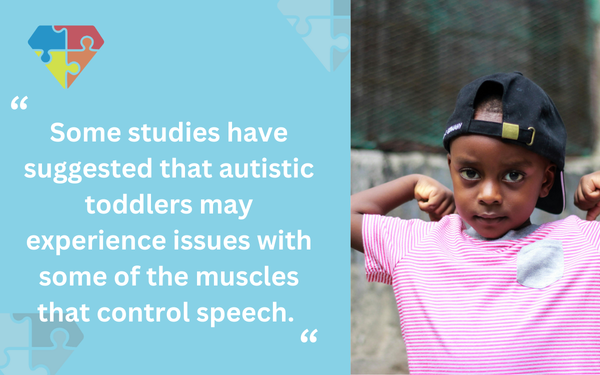
Some studies have suggested that autistic toddlers may experience issues with some of the muscles that control speech. Known as apraxia, these muscles can stop working as well as they once did, which makes it challenging for children to make the physical motions necessary for speech.
There also could be other underlying neurological factors, such as issues processing sounds or even subclinical epilepsy — which are unnoticed seizures that could be happening and affect speech as well as overall development.
Still further studies suggest that stress, anxiety and sensory overload could all contribute to autistic toddlers losing words. For instance, if a major life change occurs, such as a move or the arrival of a new sibling, it could cause excess stress and anxiety.
To cope with these changes, autistic toddlers may regress as a way to help them cope. If the child experiences chronic stress — due to their environment or other situations — it can lead to real burnout that results in a loss of words.
And if the child experiences sensory overload such as in a loud environment, they may lose words temporarily as they shut down to try to center themselves.
How Does ABA Therapy Address Regression?
Luckily, regression doesn’t have to be a permanent thing. Through targeted interventions such as applied behavior analysis (ABA therapy), autistic toddlers can re-learn the skills and abilities they once had.
ABA therapy will work to identify the exact skills that the child has lost and then implement structured strategies that are personalized to each child to target the skill loss.
In many ways, this will be a re-learning of the skills. Therapists will break them down into smaller steps so it’s easier for autistic toddlers to understand. They’ll use prompts to engage the child, gradually fading those prompts as the child masters the steps.
Therapists will also use positive reinforcement to reward the child for successful attempts, which keeps them motivated in the activity and wanting to learn more. This works throughout ABA therapy, whether therapists are targeting a new skill or helping the child find a replacement for behaviors that are harmful and/or negative.
In time, autistic toddlers who lose words temporarily can once again master the skill and continue their development.
Blue Gems ABA Addresses Regression in Autistic Toddlers
Autistic toddlers may experience regression in their development at times, even losing words temporarily. When this happens, it takes targeted interventions such as ABA therapy to help them re-learn the skills they once mastered.
At Blue Gems ABA, our experienced team of therapists identify targeted interventions to help each child re-learn skills they lost, using personalized treatment plans based on each child’s unique strengths, challenges, preferences and needs.
To learn more, please contact us today.
Frequently Asked Questions (FAQs)
- Is regression in autism permanent?
- Not necessarily. With interventions like ABA therapy, many children can regain lost skills.
- What age does regression typically occur?
- Between 15 and 30 months of age.
- Can stress really cause skill loss?
- Yes, chronic stress or major life changes can overwhelm autistic toddlers, leading to temporary regression.
- How does ABA therapy help with regression?
- ABA identifies lost skills and uses customized, structured teaching methods to rebuild them using reinforcement and gradual prompting.
 617-297-7998
 617-340-3371


 English
  Spanish