


Applied behavior analysis (ABA therapy) can be an overwhelming experience for families. Many parents expect to walk into a clinic or open their doors to a therapist and immediately see intensive work on communication, academic tasks or behavior reduction.
However, if you observe a session during the first two weeks, it might look a lot like just playing.
This “play,” though, is the most critical phase of a successful ABA therapy program. It is called pairing.
Pairing is the process of building a relationship where the therapist becomes associated with all of the child’s favorite things. Before we can ask a child to work on difficult skills, we must first establish that being with the therapist is a fun, safe and rewarding experience.
In this article, we’ll discuss what pairing looks like in practice and why it is the essential first step in your child’s therapeutic journey.
Key Takeaways
- Pairing is the foundation of successful ABA therapy.
- Play during early sessions is intentional and clinically important.
- Therapists use this time to build trust and learn your child’s preferences.
- A strong therapist-child relationship increases motivation and engagement.
- Learning begins naturally once the child feels safe and excited to interact.
Why Pairing is the Priority
The goal of pairing is for the Registered Behavior Technician (RBT) to become a conditioned reinforcer. This means your child starts to view the therapist as the “giver of all good things.”
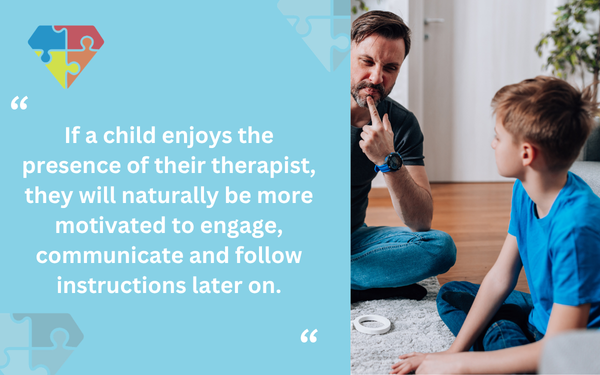
If a child enjoys the presence of their therapist, they will naturally be more motivated to engage, communicate and follow instructions later on.
Pairing is vital because it establishes trust, helps to reduce problem behaviors and creates a safe space for the child. By spending the first weeks of ABA therapy pairing, the therapist creates a foundation of comfort that the child can rely on when tasks become more challenging.
What to Expect During the First Weeks
During pairing sessions, you won’t see flashcards, timers or strict rules. Instead, a therapist will follow your child’s lead.
If your child wants to line up cars, the therapist is right there helping, making “vroom” sounds or handing over the next car. If the child wants to jump on a trampoline, the therapist is there to cheer them on or provide a steady hand.
During this phase, the therapist is basically a silent partner in the child’s joy. They are learning your child’s “language,” including their likes, dislikes, sensory preferences and the ways in which they interact with the world.
How the Transition to Learning Happens
Parents are commonly concerned about how long the play will last and when the “real” learning will start.
The transition from pairing to instructional control is gradual and data-driven. Once the therapist sees that the child is consistently approaching them, initiating eye contact or showing excitement when they arrive, they will begin to introduce low-effort demands.
While playing with bubbles, for example, the therapist might briefly stop and wait for the child to make a sound or a gesture before blowing more. This is the beginning of teaching communication within a fun context.
Because the child already trusts the therapist and loves bubbles, they are much more likely to attempt the communication than if they were being asked to do it while seated at a desk.
This transition ensures that the child never feels tricked. Instead, the demands become a natural part of the play, and the child learns that following instructions leads to even more fun.
The Role of the Environment
Pairing happens between a child and another person, as well as with the environment. Whether therapy is taking place in an ABA clinic or your home, the first few weeks are about making that space feel high-value.
In a clinic setting, this means exploring the sensory gym, the playrooms and the library of toys. In a home setting, it means the therapist learns where the child feels most comfortable, whether that’s on the living room rug or in a backyard swing.
By pairing the physical space with positive reinforcement, we reduce anxiety that many children with ASD experience in new environments.
Blue Gems ABA Starts the Journey Right
At Blue Gems ABA, we understand that you want to see your child succeed as quickly as possible. We also know that the fastest way to long-term success is to start slow.
By investing time in pairing during those first critical weeks, we ensure that your child’s ABA therapy experience is built on a foundation of joy and mutual respect.
Our clinical teams are experts in “the art of play.” We work with your child and also become their favorite part of the day. This relationship is what allows us to eventually tackle complex goals in social skills, self-care and academics.
To learn more, please contact us today.
FAQs About Pairing
