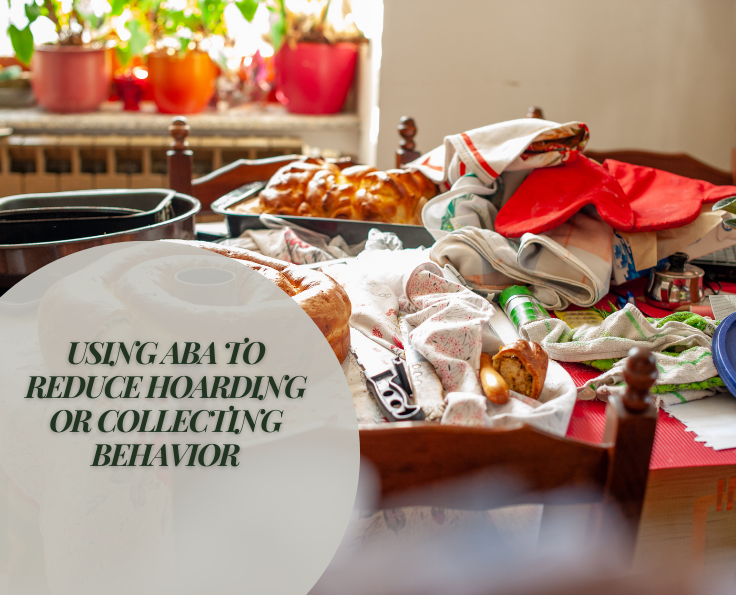
Using ABA to Reduce Hoarding or Collecting Behavior
The most typical symptoms of autism spectrum disorder (ASD) are deficits with communication and social interaction, coupled with sensory sensitivities, restrictive interests and repetitive behaviors.
Some children on the autism spectrum may additionally exhibit other challenging behaviors as a result of their neurodevelopmental disorder. Common examples include self-stimulatory behaviors — with some being self-harmful — and hoarding.
Below, we’ll discuss the prevalence of hoarding and its impact on children with autism, as well as how to use ABA therapy to reduce hoarding or collecting behavior.
Key Takeaways
- Up to 25% of children with ASD and anxiety exhibit hoarding behavior—compared to just 2%–5% in the general population.
- Hoarding in children with ASD is often linked to anxiety, depression, and challenges with letting go of items.
- ABA therapy uses techniques like Functional Behavior Assessment, task analysis, and reinforcement to address hoarding behavior.
- Individualized treatment plans are essential to effectively reduce hoarding while improving overall life skills.
Table Of Contents
How Prevalent Are Hoarding Behaviors in Children with ASD?
Studies have shown that as many as 25% of all children with autism show hoarding symptoms when that child also suffers from an anxiety disorder. This is significant considering only about 2% to 5% of the general population exhibits hoarding behaviors.
Hoarding or collecting behaviors can vary greatly from one child to the next. The most severe cases usually occur in children who internalize and/or mask their symptoms, and those who suffer from depression or anxiety.
Letting items go that others perceive as junk may cause extra anxiety to children with autism. Instead of tossing them out, then, they hold onto them to the point where they end up collecting many things they don’t really need — or even like.
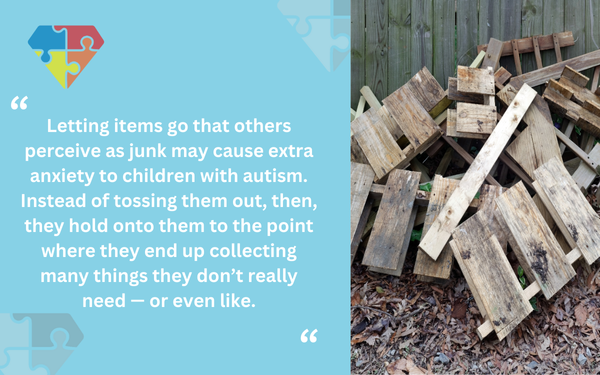
The major problem is that hoarding can cause spaces to become very cluttered and crowded, sometimes even turning dangerous. When others try to help them discard unneeded items, it could even cause extra distress.
| Feature | General Population | Children with ASD |
|---|---|---|
| Hoarding Prevalence | 2%–5% | Up to 25% (when anxiety is also present) |
| Common Triggers | Mental health conditions | Anxiety, depression, masking behaviors |
| Impact | Cluttered/dangerous spaces | Emotional distress, heightened anxiety |
| Intervention | CBT, organization strategies | ABA therapy with individualized plan |
How Does ABA Therapy Approach Hoarding Behavior?
When dealing with hoarding behavior, applied behavior analysis (ABA therapy) will first seek to get to the underlying causes of the behavior. As a scientific-based approach to learning, ABA therapy focuses on modifying behaviors, and improving communication, social and daily living skills.
Since each treatment plan is unique to the individual child’s strengths, challenges, needs and preferences, understanding what is causing the hoarding behavior is essential to creating a targeted intervention to address it.
There are many strategies and approaches ABA therapy can take to help reduce hoarding or collecting behavior, and which ones are chosen will depend on in-depth evaluation and data collection for each patient.
In time, the treatment can help to reduce hoarding behaviors while also improving a child’s overall functioning.
What Strategies Does ABA Therapy Employ for Hoarding or Collecting Behavior?
Functional Behavior Assessment (FBA) is often the foundation of addressing any problem behavior, including hoarding. Through FBA, therapists can identify any underlying reasons why a child may be hoarding.
The analysis will give insights into antecedents, triggers and consequences for each hoarding behavior, which then sheds light on what approaches might be most effective to address them.
The ABA therapy plan will then work on addressing what is causing the anxiety and/or depression, which are often the most likely causes of hoarding behaviors. Following the ABC principle of antecedent, behavior and consequence, the therapist can work with the child to reduce their anxiety, for instance, which can reduce hoarding behaviors.
Task analysis is also an effective approach. This will break down tasks related to hoarding into smaller steps that are more manageable for children with ASD to grasp.
Coupled with visual aids such as checklists, social stories and visual schedules, task analysis provides children with autism the structure they need to understand how to organize items they want and get rid of those they don’t — as well as the importance of doing so.
ABA therapists will also use prompting to help initiate action, while modeling the behavior that they want the child to exhibit.
Through all these strategies, ABA therapists will incorporate positive reinforcement, which rewards the child for successfully exhibiting the desired behavior and keeps them engaged and motivated in the therapy.
Blue Gems ABA Can Help Children Reduce Hoarding or Collecting Behavior
Hoarding or collecting behavior is actually rather common in children with ASD, especially those who also suffer from anxiety and depression. ABA therapy can help reduce those behaviors by first identifying the underlying causes and then creating targeted interventions that address them.
At Blue Gems ABA, we personalize all our treatment plans to each child’s unique needs, helping them to reduce hoarding or collecting behavior, and build other skills for daily living.
To learn more, please contact us today.
Frequently Asked Questions
Q: Is hoarding common in children with autism?
A: Yes, especially in children who also experience anxiety or depression. The rate can be as high as 25%.
Q: Why do children with autism hoard items?
A: Often due to anxiety, emotional attachment, or fear of change. Letting go of items can cause distress.
Q: How does ABA therapy help reduce hoarding?
A: ABA therapy identifies the root cause of the behavior, uses structured interventions, and reinforces positive changes.
Q: What specific ABA techniques are used?
A: Functional Behavior Assessments, task analysis, visual supports, modeling, prompting, and positive reinforcement.
Q: Can all children with autism benefit from ABA for hoarding?
A: Yes, with a personalized plan tailored to each child’s needs, ABA can be highly effective.
 617-297-7998
 617-340-3371
 info@bluegemsaba.com


 English
  Spanish