
The Emotional Stages Parents Experience During ABA Treatment

When parents first hear that their child has been diagnosed with autism spectrum disorder (ASD), they likely experience a wide range of emotions all at once. This can range from shock and surprise, to sadness, anger and everything in between.
It can be quite overwhelming to receive an autism diagnosis, even for those who were expecting that the diagnosis would be given. Those emotions may change over time, especially when their child begins applied behavior analysis, or ABA therapy.
While it may be difficult to do so, parents should understand that they are not alone in feeling this way. It’s completely natural to feel all the emotions under the sun, sometimes in rapid succession.
In this article, we’ll discuss the emotional stages parents experience during ABA treatment.
| Key Takeaways |
|---|
| Parents of children with ASD often experience a range of intense emotions throughout the ABA therapy journey. |
| Initial stages can feel overwhelming due to the intensity and logistics of therapy. |
| Intermediate emotions often stem from slow progress and social isolation. |
| Long-term emotions tend to be more positive as routines are established and progress is observed. |
| Support, education, and involvement in therapy help empower parents over time. |
Table Of Contents
Initial Emotions
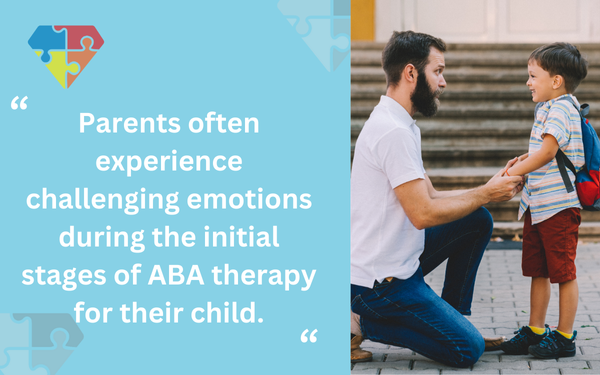
Parents often experience challenging emotions during the initial stages of ABA therapy for their child.
One of the first emotions that parents feel is overwhelm. That’s because ABA therapy can be quite intensive, requiring many hours multiple days a week.
This can create logistical challenges that are very hard to wrap your head around. Managing your child’s ABA therapy sessions — including scheduling, transportation and attending them — can prove difficult if not impossible at times.
Parents also have to figure out how they are going to rearrange their daily routines so they can still get everything done they need to do in a day.
All of this can create a lot of stress on the parent, as they face intense demands from managing routines to shouldering the financial burden to coordinating with multiple professionals for their child’s care.
At the same time, parents may feel guilt in the early stages of ABA therapy because of their child’s diagnosis, how intense the therapy is and the fact that they may not be able to do more.
| Stage | Common Emotions | Description |
|---|---|---|
| Initial | Overwhelm, Guilt, Stress | Adjusting to the intensity of ABA therapy, managing logistics, financial pressure, and emotional impact of diagnosis. |
| Intermediate | Anxiety, Frustration, Isolation | Concerns about progress, challenges in understanding therapy methods, reduced social engagement, emotional fatigue. |
| Long-Term | Acceptance, Satisfaction, Empowerment | Settling into therapy routine, witnessing progress, learning how to support the child, feeling hopeful and involved. |
Intermediate Emotions
As parents and children get settled into ABA therapy, some of the emotions they experience may change.
It’s very common at this stage for parents to begin feeling anxious. They may not see the progress in therapy coming as quickly as they might have initially hoped, for instance, and that might lead to them being worried about their child’s future.
It’s easy for parents to become very frustrated at this stage in ABA therapy, too. They might not understand why certain things are being done in therapy, or they may just be having trouble managing everything they need to handle in their life and that of their children.
It’s also common for parents to begin feeling isolated. As ABA therapy demands really settle in, it becomes more difficult for parents to maintain the social connections they once had, which could make them feel as if they’re alone.
Long-Term Emotions
In time, parents’ emotions often begin to progress to more “positive” ones surrounding ABA therapy and their child’s future.
At this stage, many parents have come to fully accept that their child has autism. While their child’s future may be different than what they initially had dreamed of, it can still be an amazing future.
It’s likely that the parents have settled into the routine of balancing ABA therapy with other aspects of life, which can make them feel more calm and happy overall. They also typically start to feel more satisfied with ABA therapy as their child displays new skills and behaviors that they have learned during sessions.
As parents are integrated more directly into therapy sessions, they gain more knowledge about the therapy itself and how they can help support their children. This can lead to feelings of empowerment, as they learn tricks of the trade to best support their children when ABA therapists are not around.
Blue Gems ABA Helps Support Parents of Children with ASD, Too
Parents can feel a wide range of emotions when their children begin ABA therapy. It’s very common for those feelings to progress over multiple stages as time progresses, too.
At Blue Gems ABA, we help support parents of the children with ASD who we serve. We always integrate parents into ABA therapy and openly communicate with them to promote transparency and trust.
We also recommend parents build a support network for themselves so they can take care of themselves and be the best version of themselves they can be for their children.
To learn more, please contact us today.
| Frequently Asked Questions (FAQs) |
|---|
| Is it normal to feel overwhelmed when ABA therapy begins? Yes, many parents feel overwhelmed initially due to the time, energy, and emotional demands of therapy. |
| How long does it take to start seeing results from ABA therapy? Every child is different, but progress is typically seen gradually over weeks or months, not immediately. |
| What if I don’t understand what’s happening in therapy? Communicate with your ABA team. They are there to explain the process and involve you in your child’s progress. |
| How can I support myself emotionally during this journey? Build a support network, seek parent support groups, and practice self-care regularly. |
| Will these emotions ever go away? While some emotions may persist, they often evolve into more manageable and empowering feelings with time and support. |
 617-297-7998
 617-340-3371
 info@bluegemsaba.com


 English
  Spanish