
Teaching Kids to Handle Unexpected Cancellations

Unexpected cancellations can cause children to feel emotionally overwhelmed, especially if the thing that is being cancelled is something they were looking forward to. If a friend unexpectedly gets sick and can’t come over to play, for instance, the child may act out because of the sadness and anger they feel, coupled with a lack of complete understanding.
For children with autism spectrum disorder (ASD), even minor unexpected changes to the daily routine can throw them off. That’s because the unknown can cause extreme stress, anxiety and feelings of overwhelm.
It’s impossible to control every aspect of life, which means there are going to be unexpected cancellations from time to time. Parents need to be equipped to help their child with autism handle these unexpected cancellations so they can manage their emotions well.
With the help of applied behavior analysis (ABA therapy), children on the autism spectrum can learn to navigate unexpected cancellations better. Here are some ways how.
| Key Takeaways |
|---|
| Unexpected cancellations can trigger emotional distress in children, especially those with ASD. |
| Communication and visual supports are crucial in helping children understand changes. |
| Parents should model calm, positive behavior to reinforce emotional safety. |
| Building coping skills through practice and ABA techniques prepares children for future disruptions. |
Table Of Contents
Communicate and Explain the Change
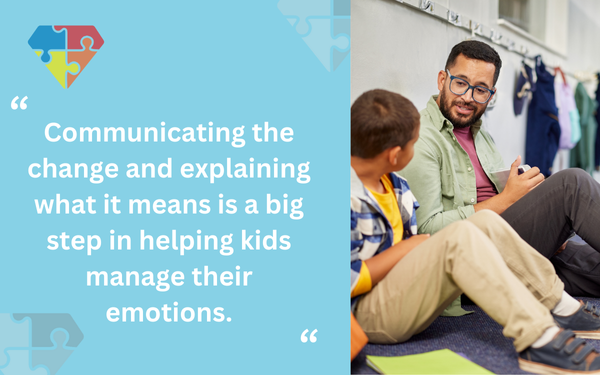
Oftentimes, children simply don’t understand a major change in the daily routine — why it’s happening and what’s going to happen as a result. So, communicating the change and explaining what it means is a big step in helping kids manage their emotions.
While you may not be able to prepare them much in advance of unexpected cancellations, the more advance notice you can give them, the better. If you use a visual schedule, update it with your child present as you’re explaining to them the change.
Connecting verbal communication with physical acts and other visual tools will help your child more fully grasp the change. You can even create a social story to help them explain the change, how they can manage their feelings about it and what’s going to happen instead.
| Strategy | Description | Tools/Tips |
|---|---|---|
| Communicate & Explain | Explain the change in routine to help your child understand what is happening and what to expect. | Visual schedules, social stories, real-time updates |
| Stay Calm & Positive | Your emotional tone affects your child. Use calm, positive language and redirect their attention. | Soothing tone, sensory tools, favorite toys or songs |
| Build Coping Skills | Gradually introduce small changes to build resilience and coping strategies. | Deep breathing, change routines, reward calm behavior |
Remain Calm and Use Positive Language
Children often take the cues from their parents when they encounter an unknown situation. So, if an unexpected cancellation occurs, it’s important for you to remain calm.
A parent’s emotional state can greatly affect their child’s emotional state. So, be soothing with your tone, which will reinforce to your child that they’re safe and all is OK.
Be open and honest with your child about the change that’s happening, but focus on the positive aspects of it. Explain how they’ll now have more time to play (if that’s true) since the other item on the schedule has been cancelled.
Be prepared to help your child manage their emotions during this phase. Even if you remain calm, it’s possible that they may not.
Help to distract them and redirect them to an activity that they like by playing a song they like, giving them a toy or book that they can focus on instead of the fact that something has been cancelled.
Provide them with time and space to calm down if they are feeling overwhelmed. Sometimes, children with autism simply need to separate themselves from overwhelming emotions and center themselves with things like fidget toys, noise-cancelling headphones or other calming sensory items.
Build Coping Skills and Resilience
Life is full of unexpected changes. So, preparing your child for the inevitable is always a good idea.
You can do this in subtle ways by introducing controlled changes throughout their days as a way to build resilience and tolerance to change. You could start simply by eating your meals in different rooms.
Gradually, you can expose them to bigger changes to see how they react, and to practice coping skills and resilience. Help them manage their emotions through calming techniques such as deep breathing.
Validate their feelings by acknowledging that it’s OK to be frustrated or sad, as you are, too. For example, if they can’t go to a park because it’s raining, tell them you know they’re sad and you were really hoping to go as well.
By modeling a calm behavior, you can help them manage their emotions and build resilience.
As they show they are working toward doing so, use positive reinforcement to reward them for their efforts. Giving them extra praise or a toy they love, you’re not only rewarding them for their behavior but keeping them engaged and motivated to repeat those behaviors in the future.
Blue Gems ABA Helps Children with Autism Handle Unexpected Cancellations
Unexpected cancellations are not easy for kids, especially those with ASD. Using the principles of ABA therapy, parents can help their children handle these changes by managing their emotions in a productive way.
At Blue Gems ABA, our team of therapists can target specific behaviors as they relate to unexpected changes so children with ASD can build flexibility and resilience skills. We craft every treatment plan with each individual patient in mind, ensuring that the plan meets the child’s needs, strengths, challenges and preferences.
To learn more, please contact us today.
| Frequently Asked Questions (FAQs) |
|---|
| What should I do if my child has a meltdown after a cancellation? Remain calm, offer a preferred calming item, and allow space to decompress. Reinforce their calming efforts positively. |
| How can I prepare my child in advance? Use visual schedules, explain possibilities of changes, and introduce small, planned disruptions to routines for practice. |
| Are these strategies specific to children with autism? They are especially helpful for children with autism, but can benefit any child learning emotional regulation and flexibility. |
 617-297-7998
 617-340-3371
 info@bluegemsaba.com


 English
  Spanish