


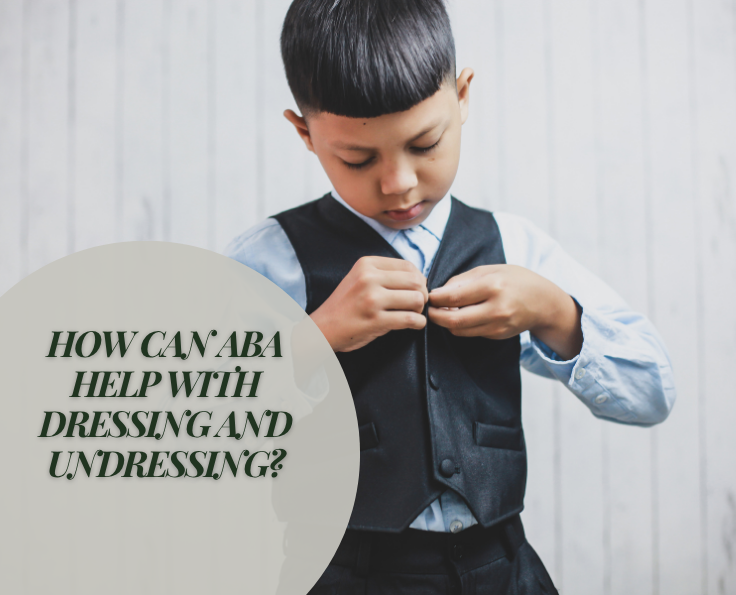
Applied behavior analysis (ABA therapy) is highly regarded for its proven ability to help children with autism spectrum disorder (ASD) gain the communication and social interaction skills they often struggle with.
While every child’s ABA therapy goals will differ depending on their unique strengths, challenges, needs and preferences, a general objective is to help them live as independently as possible.
A big part of that is helping children on the autism spectrum develop daily life skills that they will need to do so. Examples can include everything from requesting food, to using utensils properly, to getting dressed in the morning.
Teaching these skills to neurotypical children may be simple, but they can be challenging to children with autism due to the symptoms of their autism.
In this article, we’ll describe how ABA therapy can help with dressing and undressing.
| Key Takeaways |
|---|
| ABA helps children with autism learn daily life skills like dressing and undressing through structured methods. |
| Task analysis breaks down complex tasks into manageable steps. |
| Prompts and reinforcement help children gain confidence and independence. |
| Creating a predictable routine reduces stress and builds success. |
| Sensory-friendly clothing choices support comfort and cooperation. |
Why Dressing and Undressing May Be Challenging for Children with Autism
Every child with autism is unique, and the reasons why they may or may not struggle with certain skills or tasks are unique as well.
Many children on the autism spectrum struggle with sensory sensitivities. This might cause them to feel very uncomfortable, get anxious or overwhelmed when certain clothing textures touch their skin.

Dressing and undressing, then, may be difficult for them simply because the feel of clothes — or taking them on and off — causes them to go into sensory overload.
It’s common for children with ASD to also struggle with gross and fine motor skills, both of which are necessary to master to dress and undress. If they struggle with these tasks, they might become very frustrated, resulting in outbursts because they also face challenges regulating their emotions.
In other words, dressing and undressing can be a complex task for children with autism, with many underlying factors contributing to this.
| Step | Description | Tools/Prompts Used |
|---|---|---|
| 1 | Grab shirt by collar | Verbal or picture cue |
| 2 | Pull shirt over head | Physical prompt or modeling |
| 3 | Put one arm through sleeve | Gesture prompt |
| 4 | Put other arm through | Fade prompts with practice |
| 5 | Adjust shirt down | Reinforce completion |
Using Task Analysis to Teach Skills
Task analysis is a basic strategy that’s often used in ABA therapy. It involves teaching patients new skills by breaking complex tasks down into smaller and simpler steps. This makes it easier for patients to understand and more manageable for them.
Examples include first teaching the child how to grab onto the top of their shirt so they can pull it over their head. It can then progress to grabbing onto the waist of their pants so they can pull them down over their legs.
Therapists will often use prompts such as physical guidance, pictures or verbal cues to signify that it’s time for the child to start one of the tasks. Eventually, these prompts will get faded away as they start to master the skill on their own.
Each individual step of dressing and undressing will be taught separately through task analysis, and the therapy will only progress to the next step after the first one has been mastered.
Along the way, therapists will use positive reinforcement to reward the child for their successful efforts. Giving them time with a toy they love, extra praise or a token they can exchange for something later makes them feel good about their efforts, which helps them stay engaged in the therapy and motivated to learn more.
Eventually, all of these individual steps are strung together so that the child learns how to dress and undress completely.
Creating a Routine Around Dressing and Undressing
Children with ASD thrive on routine and structure. When they are able to predict what’s coming next, they are likely to feel more comfortable and less anxious or overwhelmed.
So, creating a daily routine around dressing and undressing is a great way to help support your child with autism as they learn to master these skills. These tasks can be sketched into a daily visual schedule, so the child can be reminded through pictures that getting undressed out of their PJs and dressed into their clothes is something they do when they wake up each morning — with the reverse happening at night.
Parents can help support their child in learning these tasks by setting aside their child’s clothes for the day where they can easily find them. They can also choose clothing that is easy for their child to take off and on, which helps them be more successful in completing the tasks and less frustrated in the process.
Working with the ABA therapist to choose clothing materials that are best for your child is also important. While this will be different for each child, it’s often best to choose soft and loose materials, rather than anything that’s rigid and stiff.
Blue Gems ABA Teaches Children with ASD Daily Living Skills
ABA therapy is the perfect outlet to teach children with ASD daily living skills such as dressing and undressing. This can be done in a very structured way that’s targeted specifically to each child’s unique strengths, challenges, needs and preferences.
At Blue Gems ABA, daily living skills is a major part of what we focus on helping children with autism learn. We craft every treatment plan with every patient’s needs in mind, helping them live as independently as possible.
To learn more, please contact us today.
| Frequently Asked Questions (FAQ) |
|---|
| What is task analysis? It’s an ABA method that breaks complex tasks (like dressing) into smaller, teachable steps. |
| Why is dressing difficult for children with autism? Sensory sensitivities, motor difficulties, and emotional regulation challenges can all make dressing harder. |
| How can parents support ABA at home? Use visual schedules, easy-to-wear clothing, and maintain a predictable daily routine. |
| What kind of reinforcement is used? Toys, praise, tokens, or access to favorite activities—whatever motivates the child. |
| Can dressing skills be generalized? Yes, ABA aims to help children apply these skills across settings (home, school, etc.). |
