
ABA Strategies for Handling Boredom without Meltdowns

When children with autism spectrum disorder (ASD) are bored, they might experience a meltdown more so than their neurotypical peers do. These emotional outbursts can be quite intense and seemingly come out of the blue.
Since each child on the autism spectrum is truly unique, the reasons why they are experiencing meltdowns when they’re bored can be quite unique, too. It may be because they are uncomfortable when they’re restless, they become frustrated when they don’t have structure or don’t have stimulation, or they simply have trouble communicating their needs.
Through applied behavior analysis (ABA therapy) treatment, children with ASD can learn to handle their boredom better and avoid having meltdowns. We’ll describe some ABA strategies for approaching this topic below.
| Key Takeaways |
|---|
| Boredom can trigger intense meltdowns in children with autism due to unmet needs, lack of stimulation, or communication difficulties. |
| ABA therapy begins with identifying each child’s unique triggers and needs. |
| Management strategies include communication skill-building, safe spaces, and sensory tools. |
| Prevention strategies involve structure, visual aids, and safe decision-making tools like choice boards. |
| Blue Gems ABA uses personalized plans and positive reinforcement to help children better manage and prevent boredom meltdowns. |
Table Of Contents
How ABA Therapy Approaches Boredom Meltdowns
As a science-based approach to learning and behavior, ABA therapy will first seek to understand the underlying causes of a boredom meltdown. In other words, why is the child’s current state causing them to become so distressed that they exhibit such extreme behaviors?
ABA therapy teams will do this through evaluations and assessments, discussions with parents and caregivers, and with in-person experiences they have with the child.
Some possible reasons the child may be having boredom meltdowns include:
- A lack of structure that results in too much free time
- Not enough stimulation
- Sensory sensitivities that lead to overload
- Trouble effectively communicating their feelings and needs
After the underlying cause, or causes, has been identified, then targeted interventions can be designed to help the child and their parents manage boredom better so they don’t have a meltdown.
ABA therapy strategies can also be effective at helping to prevent boredom meltdowns in the first place.
| Strategy Type | Strategy | Purpose | Tools/Supports Used |
|---|---|---|---|
| Assessment | Identify Triggers | Understand why boredom leads to meltdowns in each unique child. | Interviews, Observations, Functional Assessments |
| Management | Build Communication Skills | Enable children to express boredom and needs appropriately. | Speech Practice, Social Skills Training |
| Management | Create Safe Retreat Space | Provide calming environments when meltdowns occur. | Dim Lights, Sensory Tools, Fidget Toys |
| Prevention | Use Predictable Routines | Reduce stress by keeping daily structure consistent. | Visual Schedules, Timers |
| Prevention | Offer Safe Choices | Empower child to make activity selections independently. | Choice Boards with Images |
| Reinforcement | Positive Reinforcement | Encourage positive behavior through rewards. | Toys, Tokens, Praise |
How to Manage Boredom Meltdowns
The ABA therapy team will design strategies that are based on each child’s unique strengths, challenges, preferences and needs to help them manage boredom meltdowns.
A common strategy is to focus on helping the child build their communication and social interaction skills — things children on the autism spectrum typically struggle with. When children are able to communicate more effectively, and feel comfortable sharing their feelings with others, then solutions can be found to ensure the child isn’t bored.
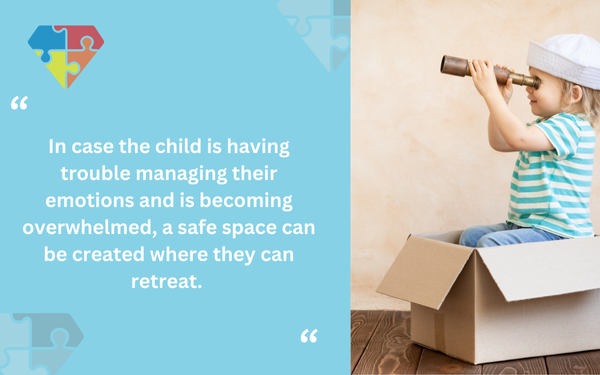
In case the child is having trouble managing their emotions and is becoming overwhelmed, a safe space can be created where they can retreat. This room should be designed in a way that caters to their specific needs, such as being dimly lit and quiet so they aren’t inundated with more sensory stimulation.
Providing the child with weighted blankets, noise-cancelling headphones or fidget toys can also help them manage their emotions and center themselves.
ABA therapists can also help teach parents and caregivers strategies for how to handle when the child is having a boredom meltdown. This might include giving them space, removing any harmful objects and remaining calm.
How to Prevent Boredom Meltdowns
The ultimate goal of ABA therapy would be to prevent boredom meltdowns from happening in the first place. The approach in this regard would again be based on the child’s specific needs.
A common strategy for preventing boredom meltdowns is to establish clear and predictable routines. This helps children with autism reduce anxiety, stress and overwhelm.
Integrating visual aids can also be very effective. Schedules of the day with words and pictures and visual timers that count down how much time is left in one activity can set the child up for success.
ABA therapists can also help to create safe choices for children to make to help them avoid boredom meltdowns. Choice boards, for example, can have words and pictures of different activities the child can choose on their own so they are a part of the process.
The therapy team can also teach the child coping skills, helping them to manage their emotions more effectively when they’re bored so it doesn’t lead to a meltdown.
Along the way, therapists will use positive reinforcement to reward the child for successfully navigating their day and managing their emotions. By presenting them with a toy they love, a token they can exchange for something later or extra praise, it helps to keep the child engaged and motivated to continue exhibiting positive behaviors.
Blue Gems ABA Helps Children with ASD Manage and Prevent Boredom Meltdowns
Children with autism may experience boredom more than their neurotypical peers. This could be because of sensory sensitivities, challenges they face with communication and social interaction, or something else entirely.
At Blue Gems ABA, our team of therapists designs ABA therapy treatment plans that are specifically catered to each child, helping them manage and prevent boredom meltdowns with targeted strategies.
To learn more, please contact us today.
| Frequently Asked Questions (FAQs) |
|---|
| Why do boredom meltdowns happen in children with autism? Triggers can include lack of stimulation, restlessness, unmet communication needs, or sensory overload. |
| How does ABA therapy address these meltdowns? ABA identifies individual triggers and applies targeted strategies such as safe spaces, routines, and skill-building. |
| What can parents do during a boredom meltdown? Stay calm, remove any hazards, give space if needed, and later reinforce successful emotion management techniques. |
| Can boredom meltdowns be prevented? Yes. With structure, choices, and coping strategies, meltdowns can be significantly reduced. |
| What kind of reinforcement is used? Tangible rewards like tokens, favorite toys, or praise help motivate and maintain positive behavior. |
 617-297-7998
 617-340-3371
 info@bluegemsaba.com


 English
  Spanish