
RBT Experience

Much of the focus of applied behavior analysis (ABA therapy) is rightly placed on clinical outcomes, data-driven milestones and the oversight provided by Board Certified Behavior Analysts (BCBAs).
However, the most consistent and direct point of contact for a child in therapy is the Registered Behavior Technician (RBT).
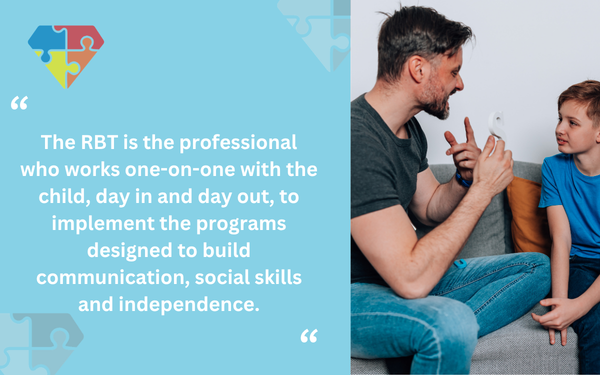
The RBT is the professional who works one-on-one with the child, day in and day out, to implement the programs designed to build communication, social skills and independence.
Understanding the RBT experience is essential for families, as it provides insight into the dedication, skill and emotional energy required to facilitate meaningful change in the lives of children with autism spectrum disorder (ASD).
Table Of Contents
What is a Registered Behavior Technician?
An RBT is a paraprofessional who practices under the close, ongoing supervision of a BCBA. To become an RBT, an individual must complete a rigorous 40-hour training program, pass a background check and successfully complete a competency assessment and a national board exam.
The RBT experience goes far beyond these technical requirements, though. It is a role that combines scientific precision with deep empathy.
On any given day, an RBT might be a teacher, a playmate, a coach and a cheerleader, all while meticulously recording data to ensure the treatment plan is working.
The Dynamic Nature of ABA Therapy Sessions
No two days are exactly the same for an RBT, just as no two children are the same. Each session is a blend of structured learning and naturalistic interaction. The RBT must be highly adaptable, moving seamlessly between different environments and learning styles.
- Pairing and Rapport Building: Before any work can happen, the RBT must become someone the child genuinely enjoys being around. This process, known as pairing, involves the RBT engaging in the child’s favorite activities and providing a fun, safe atmosphere.
- Skill Acquisition: The RBT implements programs to teach new skills, such as requesting a snack, identifying colors or taking turns in a game. This requires patience and a high level of technical skill in using prompts and reinforcement.
- Behavior Reduction: When challenging behaviors occur, the RBT remains calm and follows the specific behavior intervention plan designed by the BCBA. Their role is to help the child find safer, more effective ways to communicate their needs.
- Data Collection: Every response is tracked. This data allows the BCBA to see if a child is mastering a skill or if the teaching method needs to be adjusted.
The Emotional Landscape: Rewards and Challenges
The RBT experience is one of high emotional investment. It is a career choice driven by a desire to make a difference, but it also requires significant resilience.
The Rewards of Progress
There is perhaps no feeling more rewarding for an RBT than witnessing a breakthrough.
Whether it’s a child saying their first word, successfully using the bathroom for the first time or finally being able to play alongside a peer, the RBT is there to share in that triumph. Because they spend so many hours with the child, they are often the first to see these milestones occur.
Navigating the Challenges
The role can be physically and mentally taxing. Dealing with intense behaviors or periods of slow progress requires a specialized set of coping skills. This is why a supportive clinical environment is so vital.
RBTs rely on their BCBAs for guidance and on their fellow technicians for camaraderie and understanding.
The Importance of Supervision and Growth
An RBT never works in a vacuum.
A key component of the RBT experience is the mentorship they receive. BCBAs regularly observe sessions to provide feedback, ensure the safety of both the staff and the child, and refine the therapeutic approach.
For many RBTs, this role is the first step in a long-term career in behavioral health. Many go on to become Lead RBTs, student analysts and eventually BCBAs themselves.
This path of professional development ensures that the people working with your child are not only skilled but are also passionate about the science of ABA and the community they serve.
Supporting the RBT for Better Outcomes
When an RBT feels supported, valued and well-trained, the quality of care they provide increases exponentially. At Blue Gems ABA, we prioritize the RBT experience because we know it directly translates to better experiences for the children and families we serve.
We encourage families to view their RBT as a partner in their child’s journey. Open communication and mutual respect between caregivers and the RBT create a team atmosphere that benefits everyone involved.
Clinical Excellence at Blue Gems ABA
At Blue Gems ABA, we take pride in the caliber of our clinical staff. We understand that the RBT is the face of our therapy, and we are committed to providing our team with the tools, supervision and supportive culture they need to excel.
By investing in the RBT experience, we are investing in the future of every child who walks through our doors.
If you would like to learn more about our team or how ABA therapy can support your child’s development, please contact us today.
 617-297-7998
 617-340-3371


 English
  Spanish