Supporting Bilingual Households in ABA Therapy
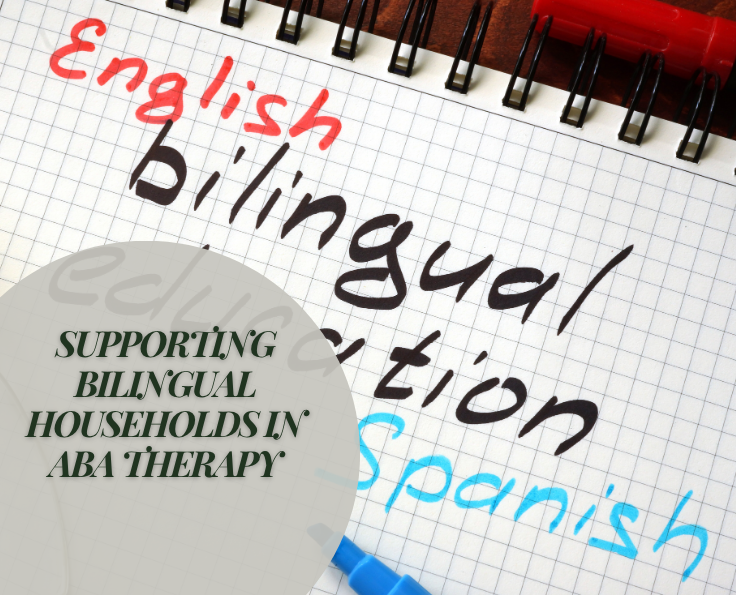
Language is a bridge to culture, heritage and identity. In the United States, millions of households are bilingual or multilingual.
When a child in a bilingual home is diagnosed with autism spectrum disorder (ASD), parents often must decide whether they should stick to one language to avoid confusion or continue speaking both.
In the past, some professionals suggested that families of children with autism focus solely on a single language to simplify the learning process. However, modern research and applied behavior analysis (ABA therapy) have shifted toward a much more inclusive and effective approach.
At Blue Gems ABA, we believe that therapy should fit the family’s life.
In this article, we’ll discuss how ABA therapy supports bilingual households and why maintaining a home language is beneficial for a child’s development.
The Importance of Language in the Home
Language is the primary tool through which children connect with their parents, grandparents and community. For a child with autism who may already face challenges with social interaction and communication, being cut off from the primary language spoken at home can create an unnecessary barrier to family bonding.
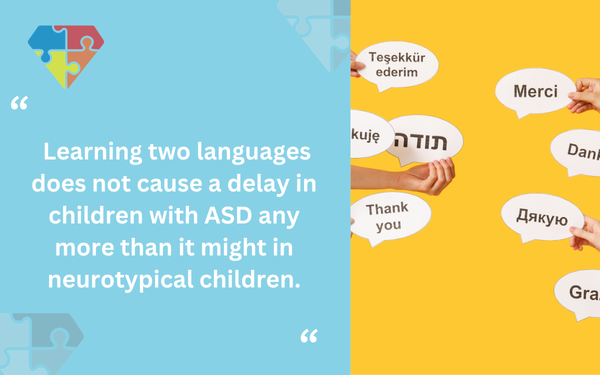
Research has shown that children with autism are capable of becoming bilingual. Learning two languages does not cause a delay in children with ASD any more than it might in neurotypical children.
In fact, maintaining the native language at home can improve the child’s ability to engage in family rituals, follow household routines and develop a stronger sense of self.
When ABA therapy is tailored to a bilingual environment, it respects these cultural ties without stunting progress on critical communication goals.
How ABA Therapy Adapts for Bilingual Families
ABA therapy is highly individualized and personalized. Before a child begins their first session, comprehensive evaluations are conducted to assess their needs, strengths, challenges, preferences and the environment in which they live.
In a bilingual household, this assessment must include an understanding of how and when each language is used.
The flexibility of ABA therapy allows therapy teams to work directly with parents to ensure that the intervention is culturally and linguistically relevant.
Here are some ways in which ABA therapy adapts to meet the needs of bilingual families.
Strategies for Supporting Multilingual Success
The goal of ABA therapy is to increase helpful behaviors and decrease those that are harmful or interfere with learning. In a bilingual home, this means the therapist and the family must act as a team to create a cohesive environment.
Parent Training and Collaboration
One of the most vital components of a successful ABA therapy program is parent training. For bilingual households, this involves ensuring that parents feel confident implementing strategies in their primary language.
If a therapist uses a prompt in English, the parent is taught how to use the equivalent prompt in their native language. This ensures that the child learns that the meaning of the instruction is the same, regardless of the language used.
Functional Communication Training (FCT)
Functional Communication Training (FCT) focuses on teaching a child to ask for what they need in a way that others can understand. In a bilingual home, a child might be taught to use a request in both languages.
For example, if a child wants water, they might be reinforced for saying “water” to their therapist and “agua” to their Spanish-speaking grandmother. This dual-language approach empowers the child to communicate effectively in any setting.
Visual Supports
Visual schedules and choice boards are common tools in ABA therapy. For bilingual families, these tools can be labeled in both languages or use universal icons to reduce the cognitive load on the child and provide a clear and consistent bridge between two sets of vocabulary.
Cultural Sensitivity and Inclusion
ABA therapy is most effective when it respects the family’s values. This includes understanding the nuances of how language is used in different cultures, such as varying levels of formality or specific social cues.
A therapist who understands a family’s cultural background can better select reinforcers and social goals that are meaningful to that household.
Blue Gems ABA Supports Diverse Families
Navigating an autism diagnosis is a journey that shouldn’t require you to leave your culture or language behind. By adapting the techniques and goals used in therapy, ABA can provide a bridge that brings bilingual families closer together.
At Blue Gems ABA, our team of experienced therapists is dedicated to supporting children on the autism spectrum within the context of their unique family lives. We consistently evaluate every patient’s progress and adjust treatment plans to ensure that therapy is accessible, inclusive and effective for every household we serve.
To learn more, please contact us today.
 617-297-7998
 617-340-3371


 English
  Spanish