
Addressing Anxiety-Driven Behaviors in Autistic Teens
The teenage years are a period of immense growth and transition. Navigating the shift from childhood to young adulthood involves managing increasing academic pressure, evolving social circles and a blossoming sense of independence.
For teenagers with autism spectrum disorder (ASD), these developmental milestones are often accompanied by a significant increase in anxiety.
When anxiety becomes overwhelming for a neurodivergent teen, it often manifests as anxiety-driven behaviors. These can include increased repetitive motions, social withdrawal, irritability or physical outbursts.
Understanding the root of these behaviors, and knowing how to address them, is essential for helping your teen thrive.
In this article, we will explore how applied behavior analysis (ABA therapy) can be adapted to identify, manage and reduce anxiety-driven behaviors in autistic teens.
| Key Takeaways |
|---|
| Anxiety is a common and significant challenge for autistic teens, especially during developmental transitions. |
| Behavior is often a form of communication, especially when anxiety is involved. |
| ABA therapy focuses on identifying the root cause (function) of behaviors. |
| Functional Communication Training (FCT) helps teens express needs before reaching a crisis point. |
| Coping strategies and gradual exposure can improve stress tolerance over time. |
| Predictability through visual supports significantly reduces anxiety. |
| Positive reinforcement encourages brave behavior and builds long-term confidence. |
Table Of Contents
Why Do Autistic Teens Experience Increased Anxiety?
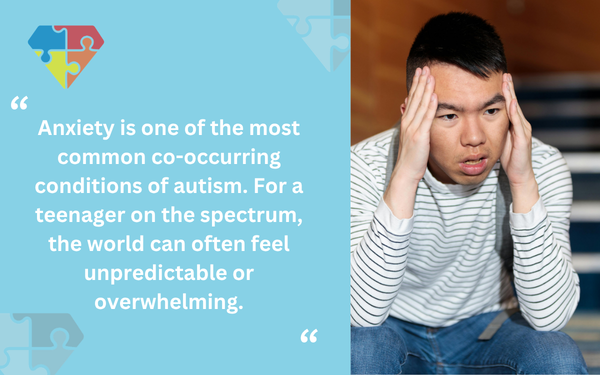
Anxiety is one of the most common co-occurring conditions of autism. For a teenager on the spectrum, the world can often feel unpredictable or overwhelming.
Several factors contribute to this heightened state of stress …
- Social Complexity: High school social dynamics are far more nuanced than those in prior school years. Teens must navigate sarcasm, unspoken social rules and the pressure to fit in.
- Executive Functioning Demands: As teens are expected to manage their own schedules, homework and personal hygiene, the demand on their executive functioning increases.
- Sensory Processing: Biological changes during puberty can shift how a teen experiences sensory input. Sounds that were once tolerable may become painful, or crowded hallways may become a source of dread.
- Fear of Failure: Many autistic teens are acutely aware of their differences. This can lead to performance anxiety in social interactions or academic tasks, causing them to avoid situations where they might make a mistake.
| Section | Key Challenge | Description | ABA Strategy | Expected Outcome |
|---|---|---|---|---|
| Social Complexity | Difficulty understanding social cues | Teens struggle with sarcasm, peer pressure, and unspoken social rules. | Role-playing, social scripts, and Functional Communication Training (FCT) | Improved confidence and reduced social anxiety |
| Executive Functioning | Managing tasks and responsibilities | Increased demands for organization, time management, and independence. | Visual schedules, task breakdowns, and “if/then” boards | Greater independence and reduced overwhelm |
| Sensory Processing | Overstimulation | Heightened sensitivity to noise, crowds, or environmental stimuli. | Coping tools like headphones, desensitization techniques | Improved tolerance and reduced stress reactions |
| Fear of Failure | Avoidance behaviors | Teens avoid tasks or situations due to fear of making mistakes. | Positive reinforcement and gradual exposure | Increased resilience and willingness to try new experiences |
| Communication Barriers | Inability to express anxiety | Teens may display behaviors instead of communicating distress. | Functional Communication Training (FCT), AAC tools | Clearer communication and fewer behavioral outbursts |
How ABA Therapy Identifies the Why Behind the Behavior
A core concept of ABA therapy is understanding the function of a behavior. When a teen exhibits a challenging behavior, an ABA therapist looks at what happened immediately before (the antecedent) and after (the consequence).
In the case of anxiety-driven behaviors, the function is typically avoidance or escape. The teen is trying to escape a situation that makes them feel unsafe or overwhelmed.
By conducting a Functional Behavior Assessment (FBA), a Board Certified Behavior Analyst (BCBA) can determine if a teen’s irritability is caused by a difficult math assignment, a noisy cafeteria or a fear of an upcoming social interaction, for instance.
Once the why has been identified, therapists can replace the problematic behavior with a functional communication skill, allowing the teen to express their anxiety in a way that gets their needs met without the stress of a meltdown.
Strategies to Manage and Reduce Anxiety
ABA therapy can offer several evidence-based strategies to help teens manage their internal stress levels.
Functional Communication Training (FCT)
One of the most effective ways to reduce anxiety is to give the teen a voice. If a teen knows they have the power to say they need a break or that a noise is too loud, for example, their anxiety will likely drop.
ABA therapists can work with teens to recognize the physical signs of anxiety early and use their words (or AAC devices) to advocate for themselves before they reach a breaking point.
Coping and Tolerance Skills
It’s impossible to remove every stressor from a teen’s life, but they can be taught how to handle them.
ABA therapists work with teens to build a coping toolbox. This might include deep breathing exercises, using noise-canceling headphones or practicing systematic desensitization, a process where the teen is slowly and safely exposed to a stressful situation while practicing relaxation techniques.
Visual Supports and Predictability
Anxiety is often at its worst when the teen is facing an uncertain situation. For a teen worried about what comes next, therapists implement advanced visual schedules and “if/then” boards.
Providing a clear roadmap helps the teen feel in control of their environment, significantly lowering the anticipatory anxiety that often leads to difficult mornings or school refusal.
Positive Reinforcement for Bravery
Positive reinforcement is used to celebrate brave behaviors.
When a teen successfully navigates a stressful social interaction or tries a new activity, therapists provide meaningful rewards. This helps shift the teen’s perspective of the activity from something scary to something rewarding.
Blue Gems ABA Supports the Transition to Adulthood
The ultimate goal of addressing anxiety-driven behaviors is to ensure that autism does not limit a teen’s future. By learning to manage anxiety in their teenage years, autistic teens can be better prepared for college, the workforce and independent living.
At Blue Gems ABA, we believe that therapy should be a supportive partnership. We work closely with families to ensure that the strategies we use are easily applied at home and in school to create a consistent, low-anxiety environment.
If your teenager is struggling with anxiety-related challenges, our team of experienced clinicians is here to help. We provide individualized ABA therapy programs that respect the unique needs of adolescents, helping them build the confidence they need to navigate the world.
To learn more, please contact us today.
| Frequently Asked Questions | Answer |
|---|---|
| Why do autistic teens experience more anxiety? | They often face increased social complexity, sensory sensitivities, and executive functioning demands, which can make everyday situations feel overwhelming. |
| What are anxiety-driven behaviors? | These are behaviors such as withdrawal, repetitive actions, irritability, or outbursts that occur when a teen is trying to cope with overwhelming stress. |
| How does ABA therapy help with anxiety? | ABA therapy identifies the root cause of behaviors and teaches alternative communication and coping strategies to reduce stress responses. |
| What is Functional Communication Training (FCT)? | FCT teaches teens how to express their needs clearly (e.g., asking for a break), reducing the likelihood of anxiety-driven behaviors. |
| Can anxiety in autistic teens be reduced long-term? | Yes, with consistent support, skill-building, and reinforcement, teens can learn to manage anxiety effectively over time. |
 617-297-7998
 617-340-3371


 English
  Spanish