
How ABA Supports Homework Independence

Homework is a fundamental part of the educational experience, designed to reinforce classroom learning and encourage critical thinking. For children with autism spectrum disorder (ASD), the transition from a structured school day to the less predictable environment of home can make homework overwhelming.
The challenges of staying focused, following multi-step directions and managing time can often lead to frustration for both the child and their parents.
The ultimate goal of education is not just academic success, but the development of independent life skills. Applied behavior analysis (ABA therapy) provides a science-based framework to help children with autism bridge this gap.
By using structured strategies and positive reinforcement, ABA therapy supports children in building the skills necessary to approach homework with confidence and independence.
Here are some ways in which it does so.
Table Of Contents
Building a Predictable Homework Routine
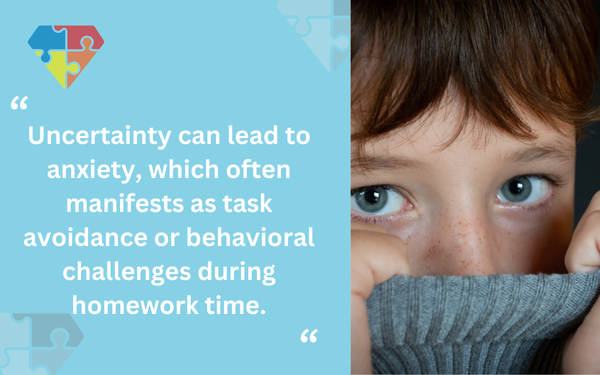
Children on the autism spectrum typically thrive when they can predict what is going to happen next. Uncertainty can lead to anxiety, which often manifests as task avoidance or behavioral challenges during homework time.
ABA therapy emphasizes the importance of a structured routine to create a sense of safety and readiness to learn.
To support homework independence, parents can work with their child’s Board Certified Behavior Analyst (BCBA) to establish a set time and place for work. When a child knows that homework always happens at 4 p.m. at the kitchen table, for instance, their brain begins to associate that environment and time with focused activity.
Over time, the start of the routine becomes a signal for the child to begin working without needing constant verbal reminders.
Using Task Analysis to Simplify Assignments
One of the most common reasons children with autism struggle with homework is the executive functioning demand of a complex task. An instruction such as “write a paragraph about your weekend” involves several steps, including choosing a topic, organizing thoughts, writing about it and checking for errors.
To a child with ASD, this can feel like a giant mountain that’s impossible to climb.
ABA therapy utilizes task analysis to help support this. It’s a process where a large goal is broken down into small, bite-sized actions.
In this example, it might look like …
- Open the notebook.
- Write the date.
- Choose one thing you did on Saturday.
- Write one sentence about it.
By mastering one step at a time, the child builds momentum. As they complete each small segment, they experience a sense of achievement, which builds the confidence needed to tackle the next step independently.
Integrating Visual Aids and Tools
Many children with autism are visual learners. Verbal instructions can sometimes be difficult to process, especially after a long day of school.
Visual supports such as checklists, “First/Then” boards and countdown timers provide a permanent reference the child can use to guide themselves.
A visual checklist of the evening’s assignments allows the child to check off completed items. This keeps them organized and provides a clear visual representation of how much work is left, which can reduce the endless feeling that can lead to burnout.
Timers are also highly effective at helping children understand the concept of time and providing a clear light at the end of the tunnel for focused work periods.
The Power of Positive Reinforcement
Positive reinforcement is a cornerstone of ABA therapy. When a child is rewarded for a specific behavior, they are more likely to repeat that behavior in the future.
In the context of homework, reinforcement should be personalized to what motivates the child, whether it’s extra screen time, a favorite snack or specific praise.
The goal is to shift the motivation from external to internal. By reinforcing the process of working independently rather than just the accuracy of the answers, parents can encourage their child to take ownership of their learning.
Fading Prompts for Long-Term Independence
In the beginning, a child may need prompts or cues to stay on task. These might be verbal reminders or physical guidance.
A key part of ABA therapy is prompt fading. This means slowly reducing the amount of help provided as the child becomes more proficient.
If a parent starts by sitting next to the child for the entire duration of homework, the next step might be sitting across the room, and eventually, being in a different room while checking in periodically.
This gradual withdrawal of support ensures the child doesn’t become dependent on the prompt and truly learns how to manage their responsibilities on their own.
Blue Gems ABA Helps Children with ASD Gain Independent
At Blue Gems ABA, our mission is to provide children with the tools they need to navigate the world with autonomy. We focus on building functional skills that improve a child’s quality of life and academic success.
By applying ABA principles to home-based challenges such as homework, we help families move away from daily power struggles and toward a more harmonious environment.
Our team of experienced BCBAs and RBTs works closely with parents to create personalized strategies that meet each child’s unique needs.
To learn more, please contact us today.
 617-297-7998
 617-340-3371


 English
  Spanish