
Supporting School Fire Drills with ABA Strategies
Children with autism spectrum disorder (ASD) face many challenges in school environments that their neurotypical peers may not. In addition to social and communication deficits, they may also struggle with repetitive behaviors, restrictive interests and sensory sensitivities.
With well-thought-out plans and approaches, inclusive classroom environments can be created to better support children on the autism spectrum.
There are some aspects of school, though, they may present particular challenges to children with autism. One is emergency preparedness, which has become even more important in recent years.
As the prevalence of autism has increased, the focus on supporting children with autism during emergency preparedness drills has come into focus more.
In this article, we’ll discuss supporting school fire drills with ABA therapy strategies.
Key Takeaways
- Students with autism often need structured preparation to cope with fire drills.
- ABA strategies like social stories and gradual desensitization can reduce anxiety and promote safety.
- Sensory tools play a valuable role in helping children manage overwhelming environments.
- Step-by-step exposure encourages confidence and eventual independence in emergency situations.
- Team support from therapists and educators is essential throughout the process.
Table Of Contents
The Challenges Students with Autism Face During Fire Drills
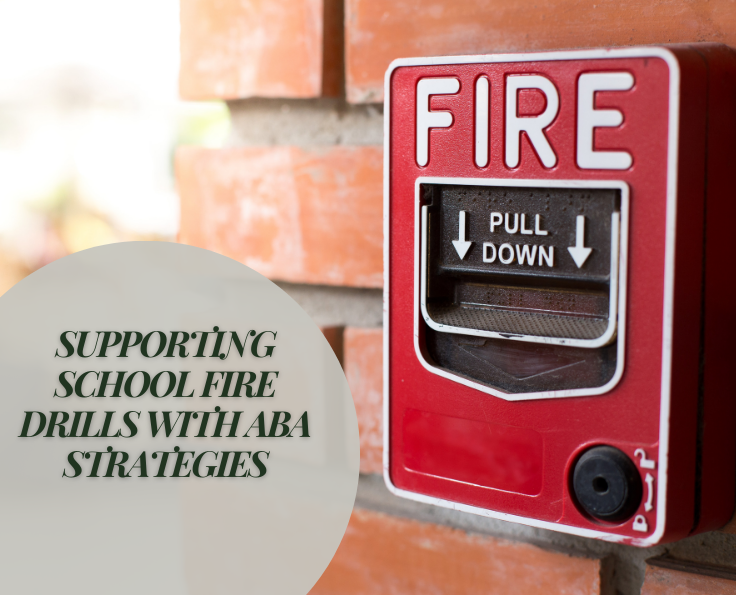
Fire drills and other emergency preparedness drills present unique challenges to students with autism. In fact, these students may be even more vulnerable during these drills than other neurotypical students.
For one, fire drills are big disruptions to normal routines. Children on the autism spectrum often thrive on structure and predictability, and even minor changes in their routine can cause them to become overwhelmed or experience anxiety quickly.
Second, fire drills are very sensory-rich experiences. There is a lot of noise from fire alarms, and students and teachers filling hallways and stairwells. There may be bright lights and other sensory stimuli that can cause a child with autism to experience overload.
Finally, there’s also the fact that fire drills can be disruptive to the learning experience for autistic students, who may find it difficult to get back on track when they return to the classroom — even if they were able to handle the change in routine and sensory stimuli well.
Preparation with ABA Therapy
A big part of supporting school fire drills with ABA therapy comes in the form of preparation. Therapists and teachers should prepare students for what’s to come in the fire drill by explaining what’s involved in creative ways.
A common ABA therapy strategy in this regard is social stories. These are personalized and visual guides that can help a student with autism better understand what a fire drill is and what they might encounter during one.
The child is actually put into the story itself, along with other teachers, students and environments they know, which helps them feel more comfortable with the subject matter. Social stories can help describe what will happen at each stage of fire drill, what the child might encounter and what’s ultimately expected of them.
Preparation can also be done through instructional videos, stories and other visual supports — all of which are meant to teach the safety concepts behind a fire drill so that when a real one happens, the child isn’t completely thrown off.
Gradual Desensitization
Another core strategy in ABA therapy is gradual exposure to new situations. In regard to a fire drill, this will be more like a gradual desensitization.
By slowly exposing the student to parts of the fire drill one at a time, it can make it easier for them to grasp the concept as they witness others progressing through it — all while not feeling too anxious or overwhelmed.
The approach could involve allowing the student to stand outside with a teacher or therapist so they can watch the other students and teachers perform the fire drill. While they won’t directly participate in the fire drill, they are being exposed to many elements of it.
This can then progress to the child observing the fire drill from inside. If needed, they can be given sensory tools to help them manage their emotions, such as fidget toys or noise-cancelling headphones.
The next stage in progress can be practicing the drill without the sensory tools so they can work on managing their emotions.
Eventually, all of this can be put together so the child can then participate in the fire drill — with the direct help and support of a teacher or therapist at first and then as part of the entire classroom eventually.
This gradual exposure to fire drills not only fosters understanding, it helps children with autism not become overwhelmed or anxious, which ultimately leads to a generalization of the necessary skills.
Blue Gems ABA Teaches Various Skills to Children with ASD
Fire drills and other emergency response drills can be overwhelming to children with ASD in school environments. By following ABA strategies, though, these children can build the skills they need to effectively participate in these drills.
At Blue Gems ABA, our team of therapists teach various skills to children with ASD. We create personalized treatment plans for them that can target a variety of skills or behaviors based on their unique strengths, challenges, preferences and needs.
To learn more, please contact us today.
FAQs
Q: What is a social story?
A social story is a personalized, visual narrative that explains a situation, such as a fire drill, to help a child understand and feel prepared for it.
Q: How can sensory tools help during a fire drill?
Tools like noise-cancelling headphones and fidget items help manage sensory overload, making the experience more tolerable for students with autism.
Q: How long does it take for a child to participate fully in a fire drill?
It varies by child. ABA therapy emphasizes gradual progression tailored to the individual’s needs and comfort levels.
Q: Can teachers implement these ABA strategies without a therapist?
Yes, with guidance. Teachers can use social stories, visual aids, and collaborate with therapists to support the student effectively.
 617-297-7998
 617-340-3371


 English
  Spanish