
Why Some Autistic Toddlers Prefer Adults Over Children
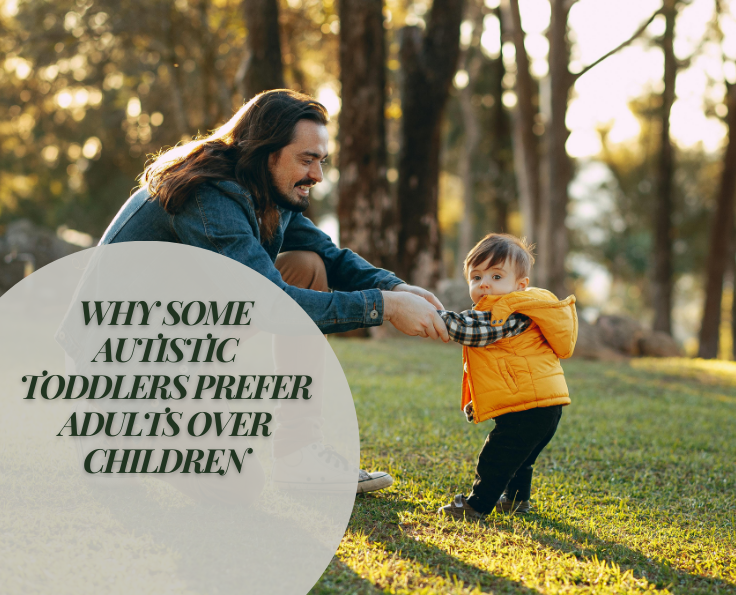
Children spend the early parts of their life surrounded by adults. Even if they have other siblings in the house, adults are the ones they have meaningful interactions with every day — for feeding, changing, comforting and playing.
At some point as the child gets older and begins to become more aware of their surroundings, a natural curiosity peaks within them about other children. When they can focus their eyes, sit up, crawl and walk, they begin to gravitate toward other children — even if that’s shown in just stares and glances at first.
This curiosity may eventually become a preference by the time they become a toddler, as they would prefer to play with kids their own age.
Some children with autism spectrum disorder (ASD) keep their preference for adults over children even as they reach the age of a toddler. But, why is this?
In this article, we’ll discuss reasons why some autistic toddlers prefer adults over children.
Key Takeaways
- Autistic toddlers may prefer adults due to the predictability and structure they provide.
- Difficulty understanding non-verbal cues makes peer communication challenging.
- Sensory overload from typical toddler play can lead to avoidance of peer interaction.
- Adults can offer calming, tailored environments that reduce anxiety and support communication.
- ABA therapy helps autistic toddlers gradually build comfort and skills for peer interaction.
Table Of Contents
Predictability
Children with autism often prefer situations that present them with predictability. It’s why they seemingly do very well with structured routines where they know what’s coming up in every part of their day.
Adults provide children with predictability that other children simply don’t. They are more likely to be consistent in their response, and more likely to follow rules and structure than other children are.
As most parents know, children can act erratically and in unpredictable ways. Not only does this present a challenge for their parents, but children with autism observing this might have a hard time understanding and adjusting to it.
As a result, they may feel overwhelmed when around other children.
Nuance
Another common struggle for children on the autism spectrum is understanding nuances such as non-verbal communication. They often have trouble identifying, understanding and interpreting cues such as gestures, eye contact, tone of voice and facial expressions.
These difficulties can drive a wedge between children with autism and others during social situations because it’s hard for them to effectively communicate. Neurotypical children use a lot of these non-verbal cues to communicate while they play, especially as they’re developing their own language and communication skills.
Adults, meanwhile, provide children with autism comfort in the fact that they are better able to communicate clearly. They can adapt the way they communicate with the child with autism to cater to what they understand and can grasp.
They might use visual cues to help the child understand a concept, and they may have more patience to allow the child to try to express how they feel or what they want.
The back-and-forth and quick-paced nature of communication between toddlers may be too much for a child with ASD to handle.
| Reason | Explanation | Adult vs Child Comparison |
|---|---|---|
| Predictability | Autistic toddlers often prefer predictable environments where they know what to expect. | Adults offer structure and consistent responses, while children can behave unpredictably, making social situations stressful. |
| Nuance | Understanding non-verbal communication (e.g., gestures, facial expressions, tone) is often difficult for autistic toddlers. | Adults adjust how they communicate to help the child understand better, while children rely heavily on nuanced cues. |
| Sensory Overload | Autistic children often experience sensory sensitivities and can become overwhelmed with too much noise, light, or touch. | Adults manage sensory input and create calmer environments; toddlers playing together often produce intense, unpredictable stimuli. |
Sensory Overload
When toddlers play, they produce a lot of sensory stimuli. The toys they play with may be loud with flashing lights, they may get messy and play with different textures, and they themselves may be loud and rambunctious.
Many children with autism suffer from sensory sensitivities, and all of these stimuli happening at the same time could cause them to experience sensory overload. If they struggle with loud sounds, bright lights or certain textures, for example, interacting with another toddler could cause them to feel anxious and overwhelmed quickly.
While interacting with adults can be a sensory-rich experience for children with autism, it’s often in a much more controlled way. Adults can provide children with opportunities to experience the world around them in a way that’s safe and more predictable.
Examples include a sensory box where they can explore different textures such as sand, soap and water with their toys. If the child starts to become overwhelmed, the adult can help them manage their emotions by guiding them to a quiet corner, giving them noise-cancelling headphones or a fidget toy to help them center themselves.
This leads to reduced anxiety, which is another reason some toddlers with autism prefer adults over other children.
Blue Gems ABA Helps Autistic Toddlers Become More Comfortable
Some autistic toddlers prefer adults over other children for the reasons listed above. In time, though, they can build their communication and social skills through applied behavior analysis (ABA therapy) so they can become more comfortable interacting with their peers.
At Blue Gems ABA, we administer ABA therapy on a one-to-one basis, helping children grow and build the skills they need to succeed. All of our treatment plans are crafted based on each individual child’s unique strengths, challenges, needs and preferences, which makes them more successful.
To learn more, please contact us today.
Frequently Asked Questions (FAQs)
- Is it normal for autistic toddlers to avoid other children?
Yes, many autistic toddlers prefer adults due to sensory, social, and communication differences. - Can an autistic toddler learn to play with other kids?
Yes, with support like ABA therapy, many autistic children build the skills needed for peer play. - Why do adults feel safer to autistic toddlers?
Adults are more predictable, communicative, and responsive to a child’s needs. - How can parents support their autistic child socially?
Create structured routines, manage sensory environments, and consider professional support like ABA therapy. - Does a preference for adults mean a child will always struggle socially?
Not necessarily. With time and support, many autistic children improve in peer interactions.
 617-297-7998
 617-340-3371


 English
  Spanish