
What Delayed Joint Play Can Indicate About Autism
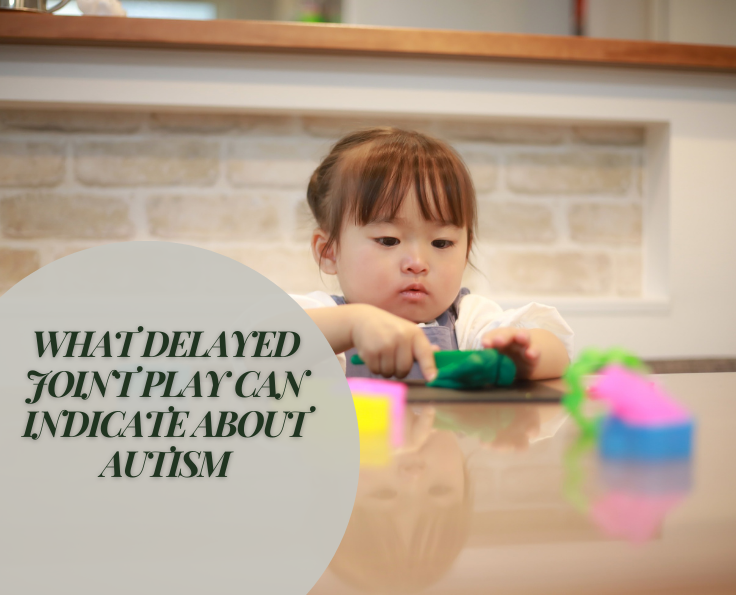
Joint play is a major opportunity for development in children, as it fosters the building blocks of social skills and communication. Children who have autism spectrum disorder (ASD), though, can struggle with joint play because they have trouble with joint attention.
This is defined as the ability to share focus with another person on an event or object. Examples include playing the same game with another child or even following a parent as they’re pointing to a bird in a tree.
Children with ASD can experience delays in joint attention, which causes extra challenges in terms of acquiring language and communication skills and having critical social interactions.
In this article, we’ll describe in more detail what joint attention is as well as what delayed joint play can indicate about autism.
Key Takeaways
- Joint attention is crucial for social and communication development in children.
- Delayed joint play is often an early sign of autism spectrum disorder (ASD).
- Signs include solitary play, ignoring names, and not following gestures.
- Joint play supports language skills, empathy, sharing, and relationship building.
- ABA therapy provides individualized support to improve joint play and social skills.
- Early intervention significantly improves long-term outcomes for children with ASD.
Table Of Contents
Examples of a Lack of Joint Play
There are many different ways in which a lack of joint play can be exhibited.
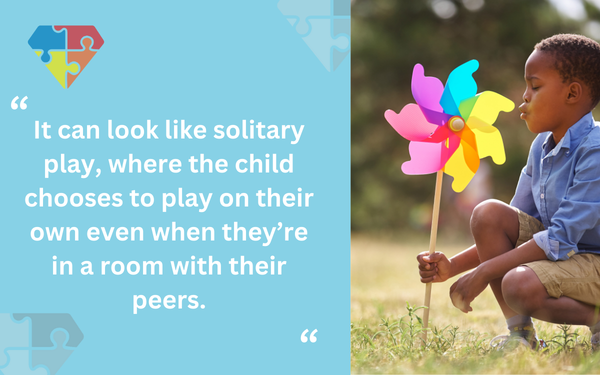
It can look like solitary play, where the child chooses to play on their own even when they’re in a room with their peers. They might go off into the corner to play with a favorite toy rather than engaging with others who are playing close to them.
They may not be interested in what others are showing them. If a child brings a toy to show them, for instance, they may not even stop what they’re doing to look at it.
During this solitary play, the child may not respond to calls for their name. It may seem as though they are either ignoring you or don’t hear you.
A lack of joint play can also include the child not shifting their focus and following your finger if you point to something they might be interested in. They may also either not establish good eye contact or look away any time that you speak to them.
These are all potential signs of a struggle with joint play.
| Section | Key Points | Description |
|---|---|---|
| What is Joint Attention? | Definition | Ability to share focus on an object or event with another person. |
| Signs of Delayed Joint Play | Behaviors | Solitary play, lack of eye contact, ignoring gestures or names, not following pointing. |
| Why It Matters | Developmental Impact | Affects language, empathy, relationship building, school readiness. |
| Link to Autism | Indicator | Delayed joint play is a hallmark sign of ASD. |
| ABA Therapy Approach | Interventions | Targeted therapy plans including imitation, shared games, and social integration. |
| Blue Gems ABA | Role | Provides tailored ABA plans to support joint play and communication skills. |
Why Joint Play Matters
When children struggle with joint play, it’s a significant deficit on the path to their development. In fact, delayed joint play serves as one of the hallmark signs of ASD.
The reason why joint play is so important is that it leads to so many bigger skills and general understanding of the world around them. Playing with others helps to build language and social skills, enables you to learn what others are thinking and intending, helps you develop empathy and understanding of feelings, and allows you to build sharing skills — all of which will be used throughout life.
Studies have shown that when children face delays in joint play and joint attention, they also commonly face challenges with language and social skills, which can lead to difficulties in academics, establishing and maintaining relationships, and living fully independently.
This is why a deficit in joint play is such a focus of not only early autism identification but also intervention programs.
How ABA Therapy Addresses Delays in Joint Play
The leading treatment option for children on the autism spectrum is known as applied behavior analysis (ABA therapy). Through this science-based approach to learning and behavior, children with ASD can improve their joint play and other related skills.
The key to the effectiveness of the therapy is, of course, early intervention; the earlier the treatment can begin, the more successful it can be. Younger children are often much more receptive to learning new skills, which can help them make greater strides with language skills, which leads to better outcomes.
Therapists will create targeted interventions that are based on each child’s unique strengths, challenges, preferences and needs to specifically address delays in joint play. This could involve learning to imitate the therapist at first, following their point and gaze, engaging in sharing and back-and-forth games and much more.
Over time, these skills will be built upon to create a bigger foundation from which the child can be more comfortable communicating and interacting with each other. In time, they can be integrated with other children, too, so they can foster engagement and build their skills even further.
Blue Gems ABA Addresses Delays in Joint Play
Delayed joint play can be a key indication of autism in children. With joint play being so critical to development, it’s key to addressing any deficits right away to help children with ASD build the social and communication skills they need.
At Blue Gems ABA, we address delays in joint play in many ways. Our ABA therapy treatment plans are targeted to each child and will be modeled and molded to whatever helps them succeed the most.
To learn more, please contact us today.
Frequently Asked Questions
- What is joint play? – It’s a shared activity where a child and another person focus on the same task or object.
- Why is joint play important? – It builds foundational skills for language, empathy, and social interaction.
- How does autism affect joint play? – Children with ASD often struggle with joint attention, making joint play more difficult.
- Can joint play skills improve? – Yes, with early and targeted ABA therapy interventions.
- How does Blue Gems ABA help? – By creating personalized treatment plans to build engagement and communication.
 617-297-7998
 617-340-3371


 English
  Spanish